Nothing happens
No opener light, motor sound or door movement may point to power, an outlet, breaker, disconnected plug, wall-control wiring or a failed opener component.
Power or control path
A garage door that will not open may have a simple control or power problem, but it can also point to a broken spring, failed cable, disconnected trolley, damaged track, worn opener component or an unbalanced door.
Start by observing what happens when you use the wall control. The sound, amount of movement, door position and visible condition help separate a control issue from a mechanical problem that should stay unused until it is assessed.
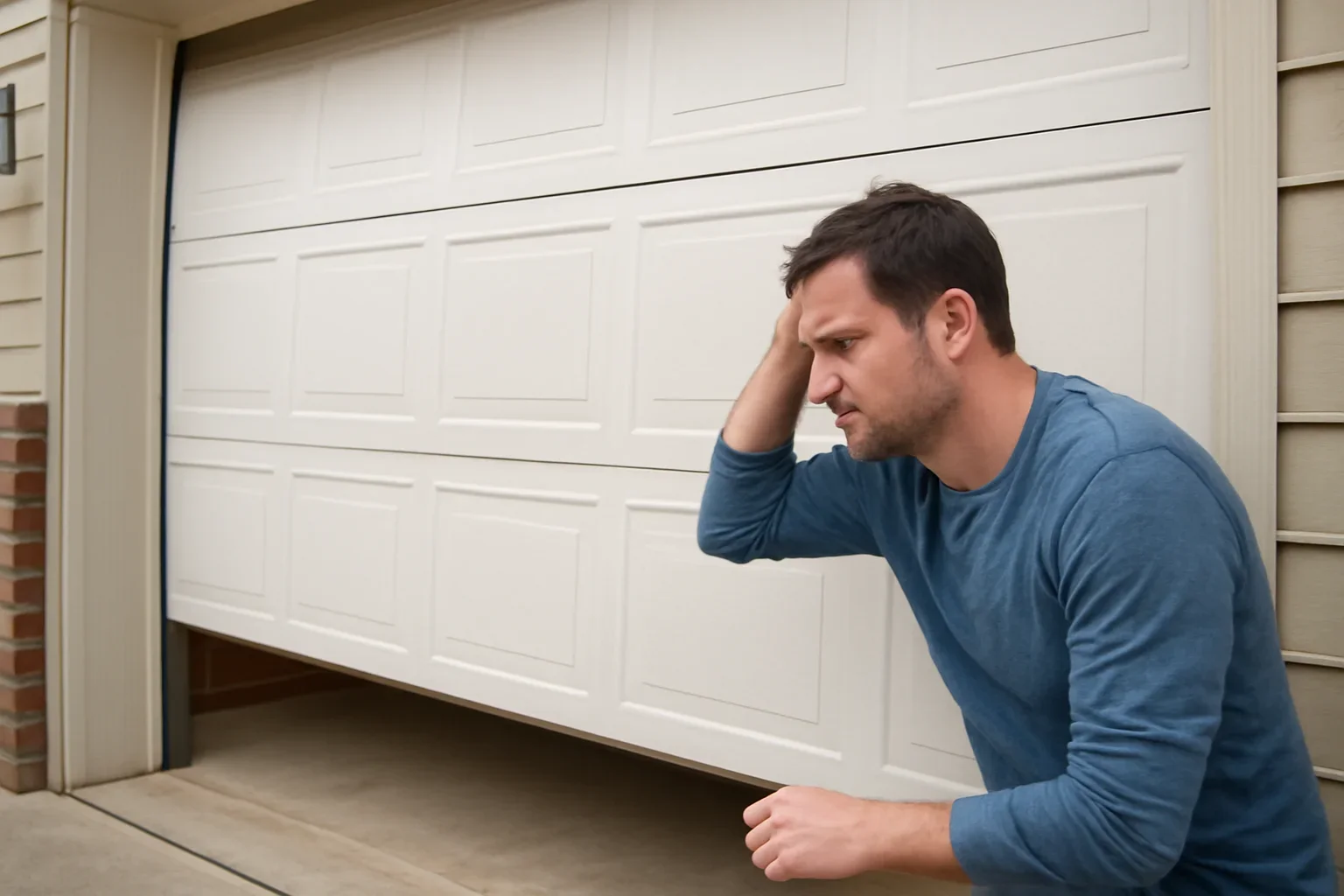
Describe the exact response instead of only saying the door is broken. This helps identify whether the likely cause is power, controls, the opener drive or the door’s lifting hardware.
No opener light, motor sound or door movement may point to power, an outlet, breaker, disconnected plug, wall-control wiring or a failed opener component.
Power or control pathThe likely path involves the remote battery, programming, signal range, lock or vacation mode, receiver compatibility or a damaged remote.
Remote or programming pathA click or motor hum without movement can involve a disengaged trolley, jammed drive, worn gear or sprocket, failed motor component or a door the opener cannot lift safely.
Opener or lifting pathA broken or weak spring, cable problem, binding track, heavy door, incorrect travel or opener strain may stop the opening cycle early.
Spring, balance or travel pathThe trolley may be disengaged, a drive component may have failed or the opener may be running without transferring movement to the door.
Trolley or drive pathA cable, drum, roller, track or lifting-hardware problem can create uneven movement. Leave the door in place and keep the opening clear.
Unsafe mechanical pathThese observations help narrow the cause without touching springs, cables, drums or internal opener wiring.
Check whether it is level, fully closed, partly open, off-track or visibly damaged. Stop if the door is unstable.
If it works while the remote does not, focus on remote batteries, programming, range or lock mode rather than the door itself.
Confirm the opener is plugged in and note whether its light or display responds. Use the electrical panel only as you normally would.
Note clicks, humming, grinding, a loud snap, light flashes and how far the door moves. Avoid repeated cycles.
Look along the floor, tracks and top of the door for storage, ice, debris or a physical object stopping travel.
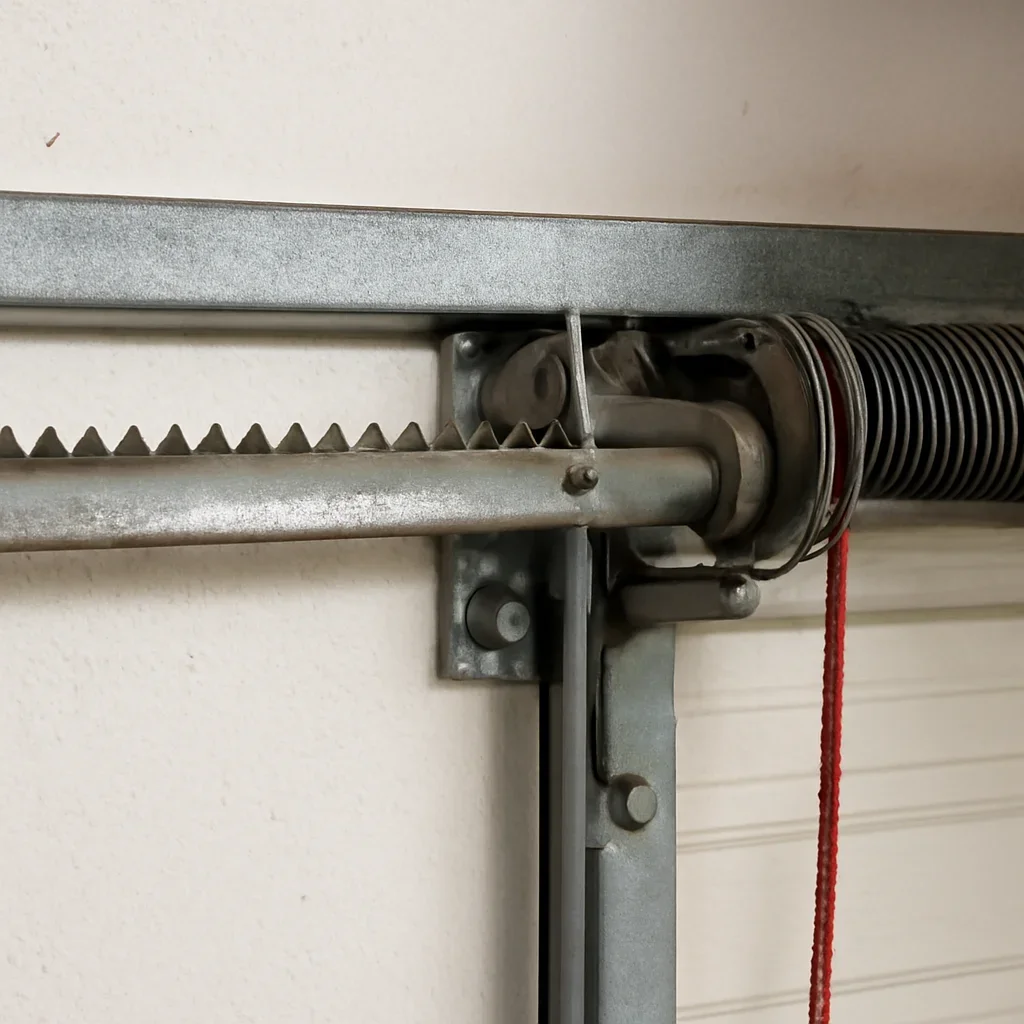
The door is supported by high-tension springs, cables and connected hardware. A problem in this system can make the door unexpectedly heavy or unstable.
Several components can create the same visible symptom. A useful diagnosis checks the door and opener as one connected system.
The opener may have no power, the wall control may be in lock mode, control wiring may be damaged or a surge may have affected the unit.
A remote can lose programming, move out of range, develop worn buttons or become incompatible after a receiver or logic-board change.
The motor may run while the door remains still when the trolley is disengaged or a drive component no longer transfers movement.
A visible spring gap, loud snap or door that suddenly feels much heavier can indicate lost spring support. The opener should not be used to force it upward.
Loose cables, damaged rollers, bent tracks, failed hinges or impact damage can make the door bind, tilt or stop during opening.
Incorrect limits, an internal component fault or model-specific diagnostic code may require opener testing after mechanical problems are ruled out.
Langley includes compact Willoughby townhomes, attached family garages in Walnut Grove and Murrayville, older or custom properties around Fort Langley and Brookswood, and detached garages or workshops toward Aldergrove and rural parts of the Township.
A vehicle trapped in a narrow townhome garage, a detached building with no second entry, a rear-lane garage, finished ceiling, gate or strata access requirement can all change how the appointment should be planned.
Power-outage planning: the Township identifies wind, snow and rain events as possible causes of outages and service disruption. Know the manufacturer’s manual-release instructions before an outage, but do not disconnect an open, heavy, crooked or visibly damaged door.
Wet or cold conditions: water, debris or ice near the threshold can create resistance, but a door that remains heavy, uneven or noisy after the obstruction is cleared still needs the correct mechanical diagnosis.
Choose the path based on whether the main failure is in the motor and controls, the moving door, or an urgent access and safety problem.
Start here when the motor, wall control, remote, rail, trolley, drive system, receiver or electronic controls are not working correctly.
Review opener repairUse this service when the door is heavy, crooked, off-track, difficult to move or showing spring, cable, roller, hinge, track or panel damage.
Review garage door repairRequest priority review when a vehicle is trapped, the door cannot secure the opening or continued use may worsen an unstable condition.
Check same-day servicePhotos and a precise symptom description can help separate an opener problem from a spring, cable, track or door-balance issue.
Say whether it is fully closed, partly open, crooked, off-track or open but unable to close.
Report no response, clicking, humming, grinding, a loud snap or the exact amount of movement.
Explain whether the wall control, remote, keypad and app each work or fail in the same way.
Include the full door, both tracks, opener label, springs and visible damage without standing under the door.
The page URL is preserved as the canonical support guide. These additional links avoid a redundant self-link and route users toward the next useful step.
Use this guide when the door reverses, stops, remains open or requires constant wall-button pressure.
Review closing problemsUse this page for blinking sensor lights, a blocked beam or a door that starts down and reverses.
Review sensor checksUse this guide when the wall control works but a compatible handheld remote needs to be added or programmed again.
Review remote programmingReview reset consequences before erasing controls or changing settings. A reset does not repair a heavy or damaged door.
Review opener reset guidanceChoose this path when several controls, receiver compatibility or access programming need coordinated support.
Review control programmingCompare replacement when major opener components are obsolete, repeatedly failing or incompatible with needed controls.
Review opener replacementRegular checks can identify changing balance, worn rollers, loose hardware and opener strain before access is lost.
Review garage door maintenanceRepair scope depends on the failed component, door size, hardware, access, compatible parts and whether several systems are involved.
Review pricing factorsThese answers cover controls, power outages, broken springs, partial opening, manual operation and what information helps before service.
Look at the full door for a crooked, partly open or damaged condition. If it appears stable and closed, test the wired wall control, confirm visible opener power and note the exact sound or movement from one attempt.
The likely causes include a weak remote battery, lost programming, poor range, damaged buttons, lock or vacation mode, receiver trouble or an incompatible remote. The door and opener are less likely to be the main problem when the wall control works normally.
The trolley may be disengaged, a chain, belt, gear, sprocket or pulley may have failed, or the opener may be unable to lift a heavy door after spring support was lost. Stop repeated operation if the door feels heavy or a spring gap is visible.
A broken or weakened spring, cable problem, track resistance, damaged roller, incorrect travel setting or opener strain can stop the door early. Do not increase force settings to make an unusually heavy or binding door move.
Only consider manual operation when the door is fully closed, level, stable and shows no broken spring, loose cable or track damage. Follow the opener manufacturer’s instructions. Do not release an open, heavy, crooked or unstable door.
Yes. Springs support most of the door’s weight. A loud snap, visible spring gap or door that suddenly feels much heavier can indicate spring failure. The opener should not be used to force the door upward.
Request prompt assessment when a person or vehicle is trapped, the door is partly open or crooked, the opening cannot be secured, a spring or cable has failed or continued operation may worsen the damage.
Share the neighbourhood, door position, whether access is blocked, the wall-control and remote response, unusual sounds, visible damage, opener brand and model, and safe photos of the full door, tracks, springs and opener.
Include your Langley location, door position, whether a vehicle is trapped, the sound or movement, visible damage, opener model and safe photos. Availability and repair scope can then be reviewed before the visit.