Bedroom or living space nearby
A belt-drive opener, especially with a DC motor and suitable mounting, is usually the stronger starting point when vibration and sound transfer matter.
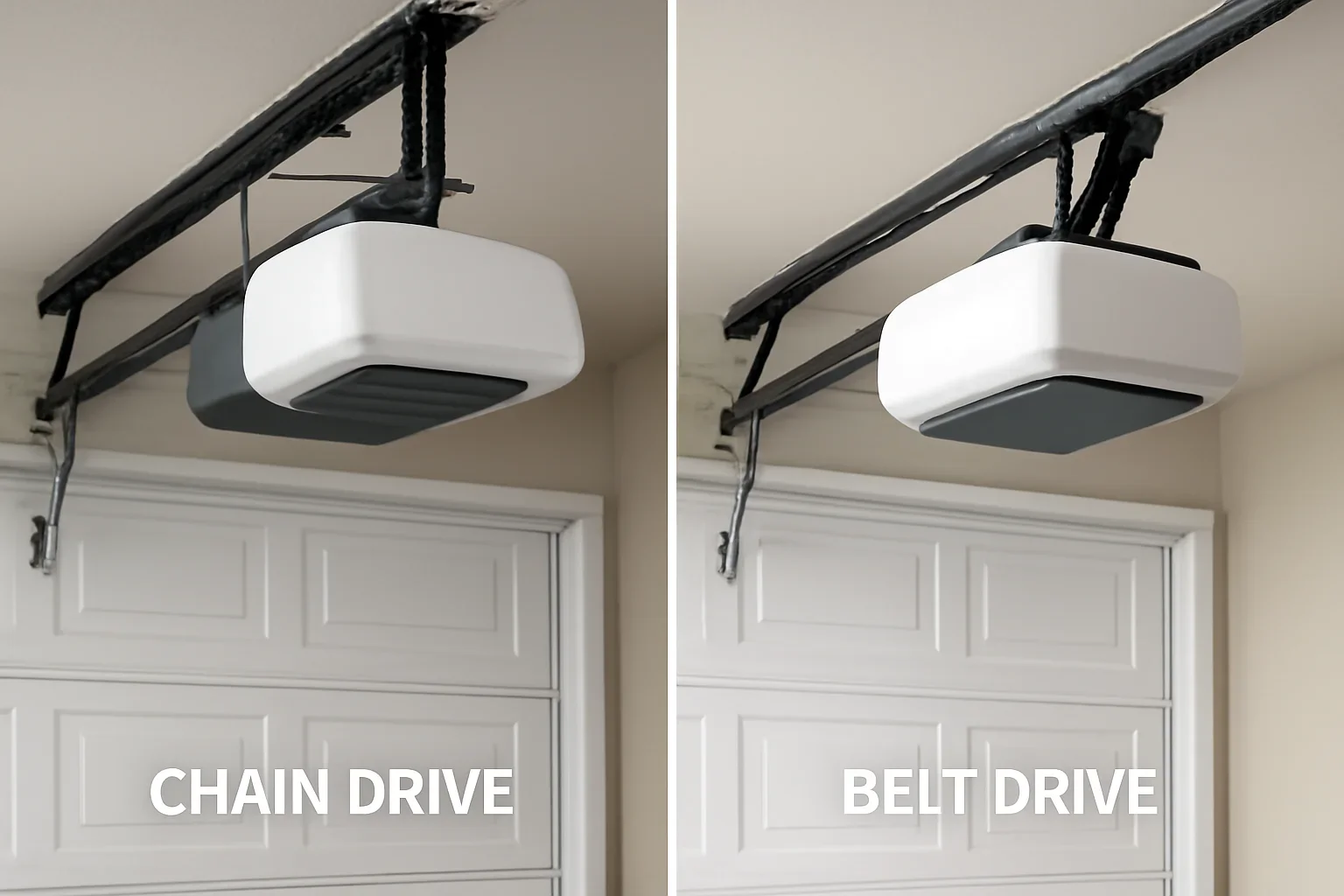
Choose between chain and belt drive by looking at the garage location, door condition, noise priorities, budget and complete opener package. Belt drive is commonly preferred where quieter operation matters. Chain drive remains a practical, durable and often lower-cost choice where sound is less important.
The drive is only one part of the result. Motor type, rail, mounting, rollers, hinges, door balance and rooms beside or above the garage can influence how the opener sounds and performs every day.
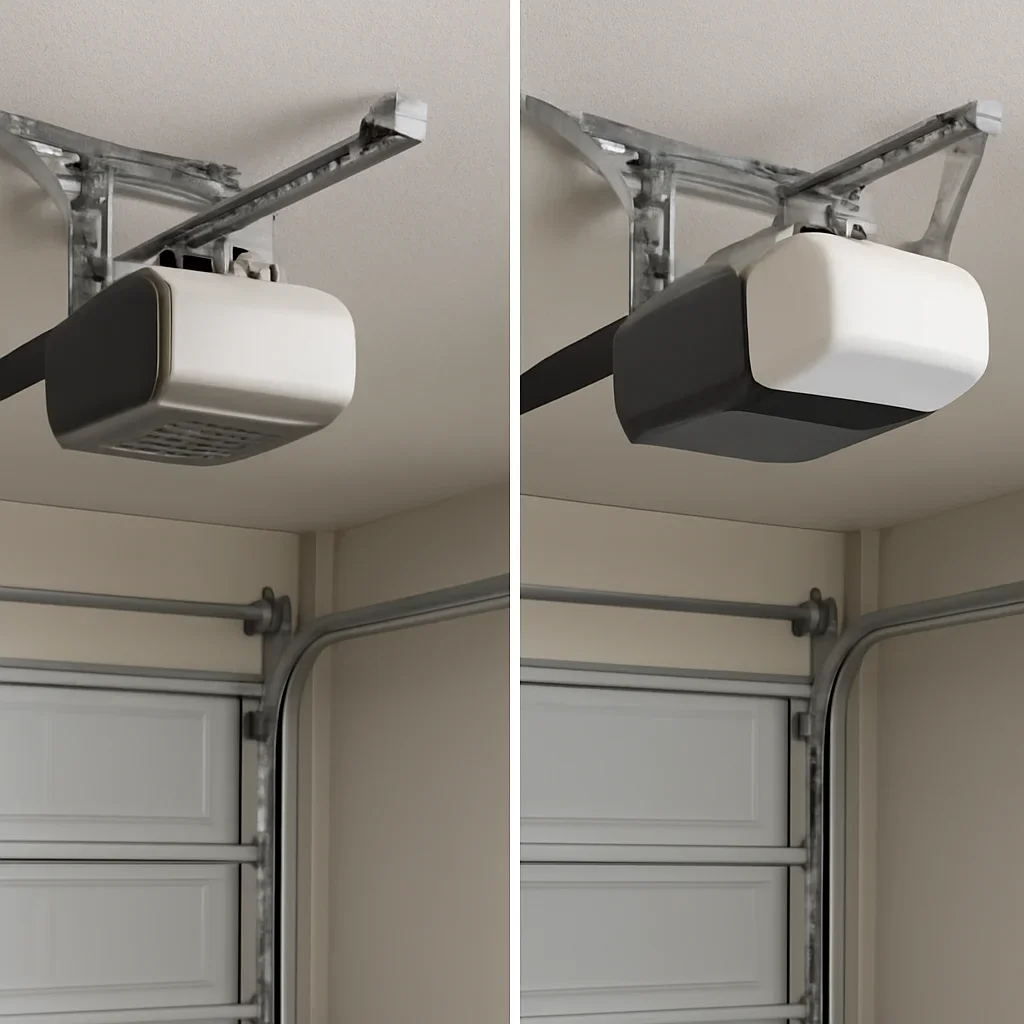
The best choice changes depending on what is above, beside and inside the garage—not simply which drive has the strongest marketing claim.
A belt-drive opener, especially with a DC motor and suitable mounting, is usually the stronger starting point when vibration and sound transfer matter.
A chain drive may provide practical value when the garage is separated from living areas and moderate operating sound is acceptable.
Compare smooth starts and stops, controls, lighting, backup access, expected cycles and door hardware—not only chain versus belt.
Check springs, balance, rollers, tracks and hinges first. A new drive system should not be expected to pull a binding or poorly balanced door.
Use this summary to narrow the direction, then review the complete opener and garage-door system before choosing a model.
A metal chain moves the trolley along the rail. Chain-drive openers are widely used, dependable and commonly priced below similar belt-drive packages, but their operation is usually more noticeable.
A reinforced belt moves the trolley along the rail. Belt drives are commonly selected for attached garages, townhomes and homes with occupied rooms near the garage.
The drive material affects sound and maintenance, but the motor, door, rail, mounting and accessories can be equally important to daily use.
AC and DC motors can feel and sound different. A DC chain-drive opener may operate more smoothly than an older AC chain-drive system, so avoid comparing the drive alone.
A correctly balanced door reduces strain on either opener. Broken springs, worn rollers or track resistance can make both chain and belt systems noisy and unreliable.
Loose supports, unsuitable framing or vibration transferred through the ceiling can make an otherwise quiet opener more noticeable inside the home.
The rail must match the door height and travel. Extension kits, ceiling storage, beams and backroom can change equipment and installation scope.
Wi-Fi, app access, remotes, keypad, lighting and battery backup may be available with either drive. Compare the actual model package.
Replacement belts, chains, gears, sprockets, logic boards and rails are model-specific. Availability and compatibility affect long-term value.
These are general tendencies. The selected opener model and condition of the complete garage-door system can change the result.
| Comparison point | Chain drive | Belt drive |
|---|---|---|
| Operating sound | Usually more audible because a metal chain moves along the rail. | Usually quieter and smoother, especially when paired with a DC motor. |
| Best property fit | Detached garages, workshops and locations where moderate sound is acceptable. | Attached garages, townhomes and homes with bedrooms or living areas nearby. |
| Initial cost | Often lower for a comparable basic package. | Often higher because quiet operation is a premium feature. |
| Durability | Known for dependable conventional operation when maintained and correctly matched. | Reinforced belts are designed for long service, but exact construction and warranty vary by model. |
| Maintenance | May require model-specific chain inspection, tension and lubrication guidance. | Inspect belt condition, rail, trolley and mounting; do not apply products unless the manufacturer directs it. |
| Heavy-door suitability | Available in models for a range of residential doors; drive type alone does not determine capacity. | Also available in higher-capacity models; the door, springs, balance and model rating must be checked. |
| Smart features | Current models may include Wi-Fi, app control, alerts and battery backup. | Current models may include the same smart and backup features. |
| Long-term value | Strong when budget and practical operation are the priorities. | Strong when reduced noise improves daily comfort in the home. |
It can reduce opener-drive sound and vibration, but it may not correct noise created by the door. A complete assessment should locate each sound rather than assuming the chain is the only source.
The opener should guide the door rather than lift excessive dead weight or force it through resistance. These checks apply to both chain and belt systems.
Langley combines growing townhome neighbourhoods, attached family garages, established detached homes, custom properties, rural lots and workshops. These settings create different noise, clearance, operating-cycle and access priorities.
Willoughby townhomes and newer attached garages may place more value on quiet operation, compact ceiling planning and connected access. Walnut Grove and Murrayville homes may involve older rails, controls or mounting points. Fort Langley properties can have custom openings, while Aldergrove and rural Langley may include detached garages and workshops where sound transfer matters less.
Choose belt drive first when: the garage shares a wall or ceiling with occupied rooms, early-morning operation is common or reducing vibration is a meaningful household priority.
Choose chain drive first when: the garage is detached, conventional durability and budget lead the project, and moderate opener noise will not affect sleeping or living areas.
Use your strongest priority to identify a starting point. Final selection should still confirm the opener model, door and garage layout.
Belt drive is usually the stronger direction for attached garages, townhouses, rooms above the garage and households that operate the door during quiet hours.
Review opener replacementChain drive is usually a strong starting point for detached garages, workshops and properties where conventional operation and equipment cost lead the decision.
Review pricing factorsHave the door and existing opener assessed first. The correct answer may be a focused repair rather than changing the drive system.
Review garage door repairThe process should verify the garage door first, then match the drive, rail, motor, controls and safety setup.
Review size, weight, balance, springs, cables, tracks, rollers, hinges and manual movement.
Check attached rooms, ceiling clearance, storage, power, network access and regular users.
Review drive, motor, rail, lighting, backup, controls, sensors, warranty and compatible accessories.
Set travel and force, align sensors and test reversal, controls, manual release and repeated full cycles.
These pages connect the drive comparison with product cost, door compatibility, repairs and installation planning.
Review door construction, insulation, weight and hardware before pairing the opener with the moving system.
Compare garage doorsRail length, controls, mounting, power, accessories and required door repairs can affect the total project.
Read the installation-cost guideUse the support guide for general programming preparation after compatible equipment is installed or reset.
Read the opener-programming guideSend the door size, current opener, property type, nearby rooms and noise priorities before selecting a model.
Contact the service teamDoor balance, hardware, tracks, rollers, seals, sensors and opener components should be checked over time.
Review garage door maintenanceChoose sensor service when the door reverses, will not close normally or shows blinking photo-eye indicators.
Review garage door sensor repairReview general booking, safety, repair and replacement questions before arranging an assessment.
Read the garage door FAQThese answers focus on noise, power, heavy doors, maintenance, cost, smart features and when changing the opener will not solve the real problem.
Belt drive is usually better when quiet operation is the main priority, especially for an attached garage or room above. Chain drive is often better when conventional durability and a lower initial cost are more important. The final choice should match the door and property.
Generally, yes. A reinforced belt usually creates less drive noise and vibration than a metal chain. Actual sound also depends on the motor, mounting, rail, rollers, hinges, door balance and building construction.
Not automatically. Both drive types are available in models designed for different residential doors. The opener’s rated capacity, motor, rail and compatibility with the door’s size, weight, balance and track setup matter more than the drive material alone.
It may be suitable, but belt-drive models can also handle larger residential doors when correctly specified. The door should be properly balanced by its spring system so the opener is not carrying excessive weight.
Chain systems may have model-specific inspection, tension and lubrication requirements. Belt systems also need inspection of the belt, rail, trolley and mounting. Follow the manufacturer’s instructions rather than applying a universal maintenance routine.
It can be when the garage is attached to occupied rooms and reduced sound improves daily comfort. In a detached garage where noise has little impact, the cost difference may be better spent on controls, lighting, backup access or door repairs.
Yes. Current models in both drive categories may offer Wi-Fi, app control, alerts, lighting and battery backup. Compare the actual opener package because features vary by model.
Share the Langley neighbourhood, attached or detached garage, rooms above or beside it, door size and material, current opener model, noise concerns, ceiling obstacles, desired controls and safe photos of the door and opener area.
Include your Langley location, attached or detached garage, rooms above, door size and material, current opener, noise priorities, ceiling restrictions, smart-access goals and safe photos.