Bottom weather seal
A flexible strip attached to the lowest door section compresses against the garage floor when the door closes.
- Helps reduce drafts and debris
- Can bridge limited floor variation
- Must match the bottom retainer or channel

Learn which garage door seal is causing a draft, visible light, debris or minor water entry before choosing a replacement product or booking repair.
Garage door weather stripping is not one universal piece. A residential opening may use a flexible bottom seal, side-and-top perimeter trim, a floor threshold and seals between door sections. Each part addresses a different gap.
Weather stripping cannot safely correct a crooked door, damaged track, broken cable or failed spring system.
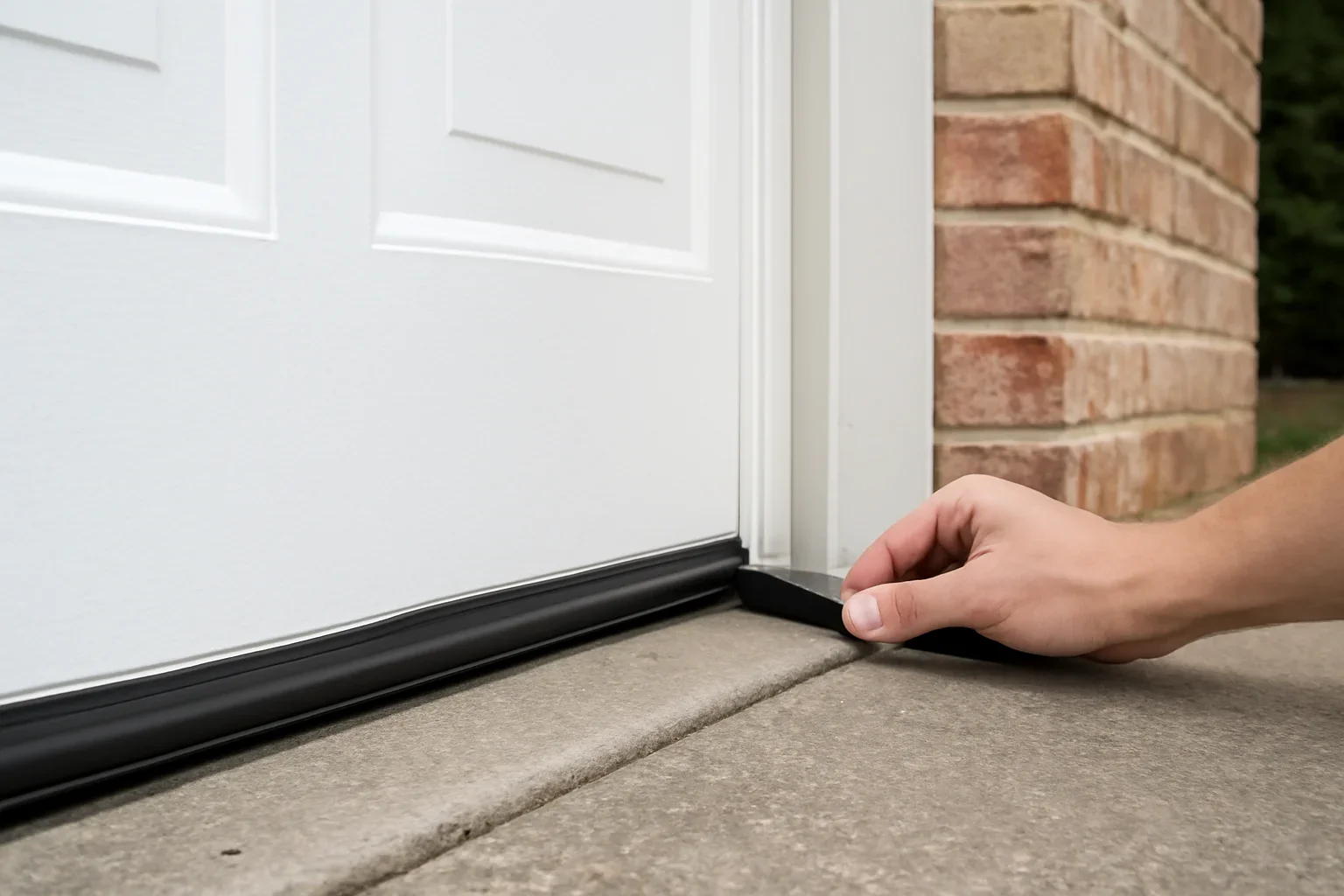
Matching the location of the gap to the correct seal is more useful than purchasing a universal strip and hoping it fits.
A flexible strip attached to the lowest door section compresses against the garage floor when the door closes.
Flexible trim is installed along the side jambs and header so its sealing edge rests against the exterior face of the closed door.
A raised floor seal can provide another contact point where the bottom seal meets an uneven slab or low driveway edge.
Some insulated and multi-layer garage doors include joint designs or seals intended to reduce air movement between sections.
A worn seal may be obvious, but recurring gaps can also point to alignment, floor or hardware problems.
A consistent line of light can reveal where the bottom or perimeter seal no longer reaches the opening.
Material that remains compressed, splits, curls or becomes stiff may no longer conform to the floor or door surface.
Debris near one edge can help identify a localized gap instead of a problem across the complete opening.
The seal may be involved, but driveway slope, slab cracks, drainage and wind-driven water should also be considered.
Perimeter weatherstripping can crack, warp or lose contact with the door because of age, impact or loose fasteners.
An uneven gap may indicate a sloped floor, door alignment issue, cable problem or track condition rather than seal wear alone.
These checks help identify the affected seal without dismantling tracks, spring components or lower door hardware.
During daylight, look around the bottom, sides and top for visible gaps. Note whether the gap is continuous or limited to one corner.
Keep people, pets and stored items away from the door while it is being operated.Look for cracks, missing sections, stiffness, curling, flattening or areas that no longer contact the concrete.
Do not loosen the bottom corner brackets or cables. These can be connected to the door’s counterbalance system.Check whether the flexible edge touches the closed door consistently without folding inward or pressing so tightly that it interferes with movement.
Gaps that change as the door moves may indicate alignment or track issues.Look for a low corner, crack, raised area or slope that prevents the bottom seal from making even contact across the opening.
A larger seal cannot correct every floor or drainage problem.The lower section should appear level and stable. A door that sits lower on one side may have a cable, track or balance issue.
Stop operating a crooked, unstable or partly off-track door.Photograph the full door, bottom edge, perimeter trim and any visible label. Note the door width and the shape of the bottom seal channel.
Different doors can use T-style, bead-style or other retainer profiles that are not interchangeable.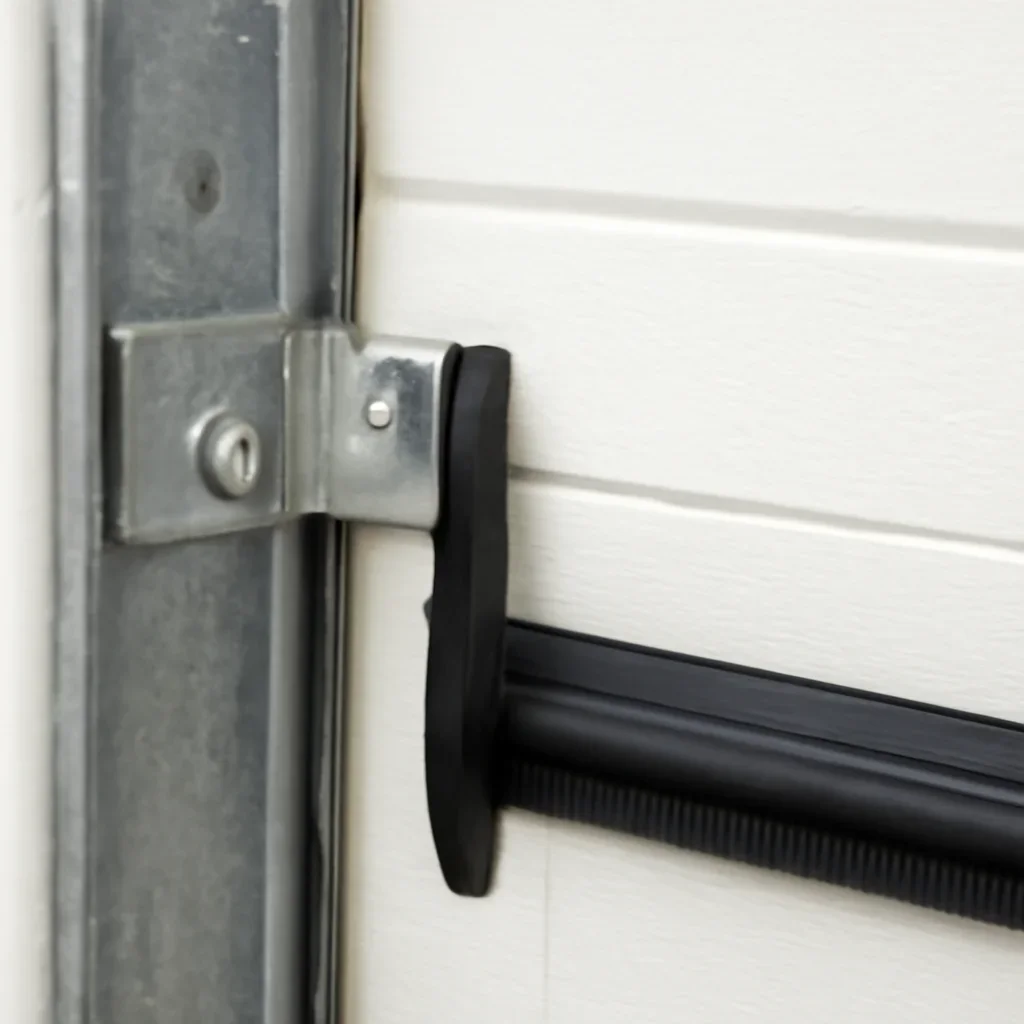
Bottom seals and perimeter products vary in size, shape and mounting method. Matching the existing system reduces the chance of a loose seal, difficult installation or continued gaps.
Garage size, floor condition, driveway exposure and property type can change which sealing problem appears first.
Frequent vehicle movement, bins and wall storage can damage perimeter trim or disturb seals near narrow garage openings.
Drafts and outside air may be more noticeable where the garage shares walls or ceilings with living areas.
Settlement, cracks and worn slab edges can leave uneven gaps that a standard bottom seal may not fully bridge.
Water moving toward the opening may require drainage or concrete correction in addition to weather stripping.
Wider doors, less common opening sizes and wind exposure may require closer attention to retainer and perimeter-seal fit.
Leaves, needles, dirt and organic debris can collect against the bottom seal and make a small gap easier to notice.
Replacing a worn seal can improve contact around the opening, but it cannot correct every source of air or water movement.
Proper seals can reduce drafts, debris and limited water entry, but wind-driven rain, driveway drainage, slab condition and normal door movement can still affect the opening.
Professional assessment is useful when the seal cannot be identified safely or the gap may involve the complete door system.
A bent, loose or corroded retainer may prevent a new seal from staying secure or compressing evenly.
Uneven closing can involve cables, drums, tracks or spring balance and should not be hidden with an oversized seal.
Door labels, retainer shape and opening measurements may be needed to avoid ordering an incompatible bottom seal.
Framing condition, fastening surface or door alignment may be contributing to repeated failure.
The source may involve drainage, concrete, driveway slope or wind-driven water rather than weather stripping alone.
A rolled or oversized seal can be involved, but travel settings, floor contact and mechanical resistance should also be checked.
Include the full closed door, bottom edge, side and top trim, visible gaps, door label, floor condition and any water path near the driveway.
These pages help separate weather-seal problems from opener, sensor, closing and mechanical-door concerns.
Review opener response, household power, controls, door balance and possible mechanical causes.
Read the opening guideCompare seal contact with travel settings, obstructions, floor resistance and door alignment.
Read the closing guideReview photo-eye alignment and indicator lights when the door reverses before reaching the weather seal.
Review the sensor guideUse the repair page when gaps may involve tracks, rollers, panels, springs, cables or door balance.
Review garage door repairCompare new door construction, section joints, insulation, finishes and weather-sealing features.
Explore garage doorsReview how door construction and sealing work together when garage comfort is an important goal.
Compare insulated doorsReview general cost factors before requesting weather-seal, repair or replacement work.
Review pricingThese answers cover seal types, gaps, water, drafts, compatibility and replacement timing.
Close the door and identify whether the gap is under, beside or above it. Then check whether the door is level before assuming the weather stripping alone needs replacement.
Common signs include cracks, stiffness, missing sections, permanent flattening, curling and areas that no longer touch the garage floor.
No. Seal shape, width, bead size and retainer-channel design vary. Match the product to the door or existing retainer before ordering a replacement.
It may reduce limited water entry caused by a worn seal. It cannot fully correct water flowing toward the garage, major floor gaps, poor drainage or wind-driven rain.
The cause may be an uneven slab, compressed seal, door alignment problem or cable and balance issue. A larger seal is not always the correct solution.
Sealing gaps can reduce drafts and air movement. Overall comfort still depends on the door construction, walls, ceiling, windows and other openings.
Replacement may be appropriate when the flexible edge is cracked, warped, missing or no longer contacts the closed door consistently.
Send your location, door width, full-door photos, close views of the bottom and perimeter seals, visible gaps, floor condition and any available manufacturer label.
Share photos of the closed door, bottom seal, perimeter trim, concrete floor and visible gaps. The details help determine whether the next step is weather stripping, retainer work, alignment repair or a wider door assessment.