One side hangs lower
An uneven door may have a roller outside the track, a cable off the drum, a broken cable, or unequal spring and lifting support.

An off-track garage door can become unstable quickly. One or more rollers may leave the track after cable failure, impact, loose brackets, worn rollers, track movement, or uneven lifting. The door may hang crooked, bind, twist the panels, or remain partly open.
Garage door off-track repair in Fernridge should begin with stabilizing the door and identifying why the roller left its path. Detached shops, taller doors, long driveways, trailers, outdoor equipment, and semi-rural access can all affect the repair plan and first-visit scope.
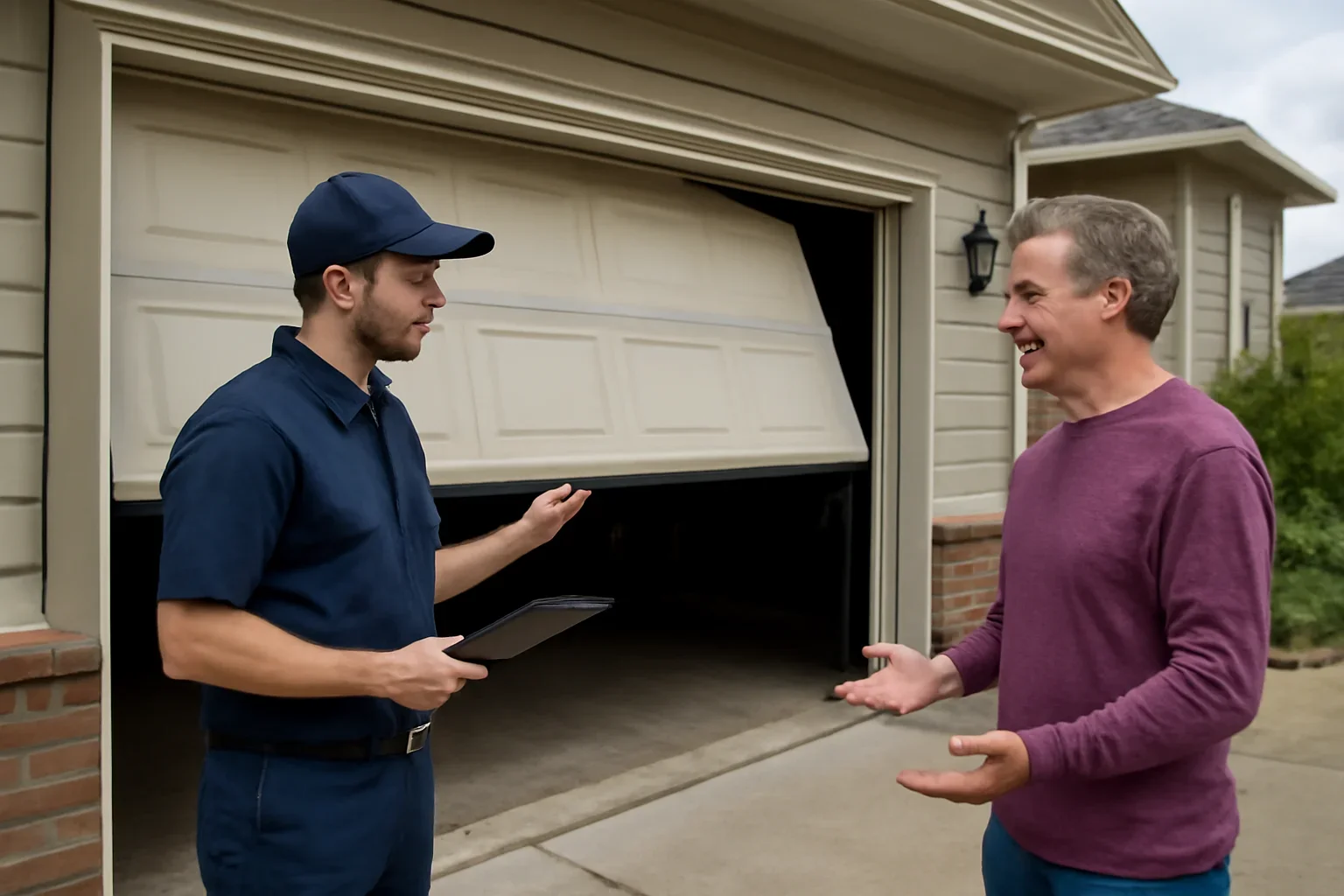
The opener can pull the door farther out of position, bend tracks, damage panels, break hinges, or increase load on the remaining cable and rollers. A partly open door may also shift suddenly.
The door may be fully jammed or still move slightly. Continued operation can turn a limited roller or track issue into panel, cable, or opener damage.
An uneven door may have a roller outside the track, a cable off the drum, a broken cable, or unequal spring and lifting support.
The roller stem may be bent, the hinge may be damaged, the track may be spread, or the door may have shifted after impact or cable failure.
A panel or roller can bind at the curved track, causing the door to stop, twist, or pull against the opener rail and trolley.
Impact, loose fasteners, weak mounting points, or door movement can change track spacing and allow the roller to leave its path.
Uneven cable support can lower one side and pull the rollers against or out of the tracks.
Off-track travel can twist hinges, damage panel edges, loosen reinforcement, and change the shape of the full door.
Putting the roller back into the track is only one part of the repair. The cause and connected damage should be identified before normal operation resumes.
The repair should address the original cause so the door is not returned to service with the same underlying weakness.
A snapped, loose, crossed, or off-drum cable can remove support from one side and pull the door out of level.
Vehicles, trailers, tractors, ladders, storage, and equipment can bend tracks, panels, brackets, rollers, or bottom fixtures.
Seized bearings, loose roller stems, cracked hinges, and worn mounting points can let the roller travel at the wrong angle.
Weak fastener points, vibration, building movement, previous repair, or heavy door use can change track spacing and alignment.
A bin, tool, trailer part, equipment attachment, or stored item can catch one side of the door and twist it while the opener continues pulling.
Poor balance can make the door heavy, uneven, or difficult to control, increasing strain on rollers, tracks, cables, and the opener.
A bent or weakened section can flex through the curved track and change hinge or roller alignment.
Running the opener against a jammed, heavy, or uneven door can pull the top section and trolley while the lower door remains out of position.
The work should begin with control and stabilization, then move to the cause, related damage, alignment, balance, and full-system testing.
The current position, weight, cable support, panel twist, and risk of sudden movement are reviewed before hardware is adjusted.
Tracks, rollers, hinges, cables, drums, springs, panels, brackets, impact points, and opener movement are inspected.
Approved track, roller, hinge, cable, bracket, panel, or balance work is completed before the door is returned to its travel path.
Manual travel, track spacing, roller movement, cable position, balance, panel alignment, opener travel, sensors, and reversal are checked.
The visible roller and track may not be the only damaged components, especially after impact or forced opener operation.
Roller stems can bend, bearings can seize, hinges can crack, tracks can spread, and brackets can pull away from the framing.
Uneven support can move cables off the drums, damage lower fixtures, and leave one side of the door carrying more load.
Twisting can damage panel edges, struts, hinges, top reinforcement, the opener arm, trolley, and rail.
The practical repair depends on how far the door moved, which parts failed, and whether the panels and supporting hardware remain structurally suitable.
The final scope depends on the door position, original cause, damaged components, and whether the opening must first be secured.
For broader repair factors, review the garage door repair cost guide.
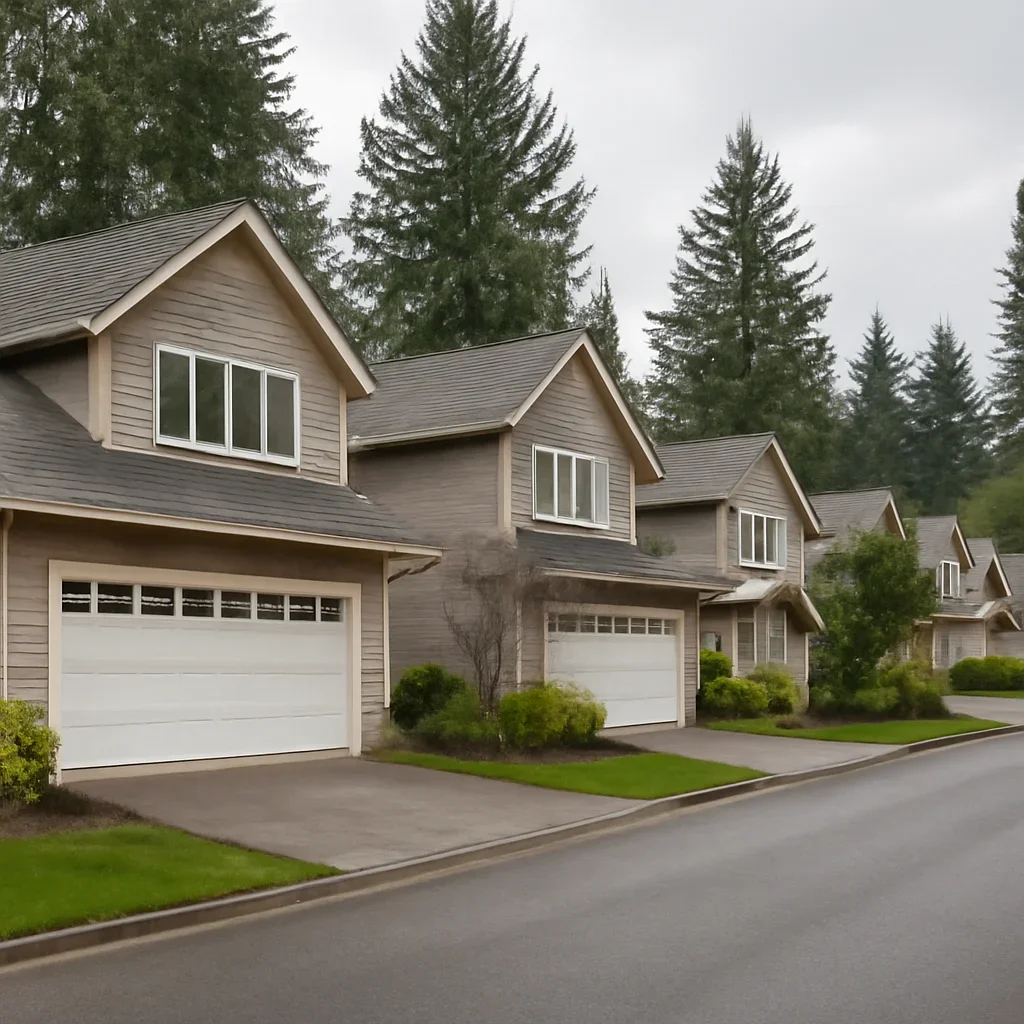
Fernridge includes residential garages, detached shops, semi-rural outbuildings, longer driveways, and spaces used for vehicles, trailers, storage, and equipment. Taller and wider doors may use heavier sections, different springs, longer tracks, and stronger supports.
Gravel, mud, leaves, dust, moisture, pests, and outdoor equipment can affect lower tracks, rollers, brackets, cables, and sensors. Gate access, parked trailers, workbenches, shelving, and limited turnaround space may also affect the safest repair setup.
Share the building type, gate instructions, driveway condition, door size, ceiling height, nearby equipment, and whether the door blocks essential access.
These related pages can help identify the connected repair that caused or followed the off-track event.
Use the contact page for a general question that is not creating an immediate safety, access, or security problem.
Use the service booking page when the door is hanging, blocking a vehicle or equipment, unable to secure the opening, or at risk of shifting.
The opener can pull against twisted panels and jammed rollers, increasing damage to the top section, trolley, rail, hinges, cables, and tracks.
These answers cover safety, common causes, cables, tracks, opener use, detached-shop doors, repair options, and booking details.
Stop operating the door, keep people, pets, vehicles, and equipment away, and do not stand beneath it. Avoid pushing rollers back into place, bending tracks, pulling cables, adjusting springs, or using the opener again.
Manual movement may be unsafe because the door can be heavy, twisted, unsupported, or affected by cable and spring problems. Leave the door in place and arrange an assessment rather than trying to force it closed.
Common causes include cable failure, impact, loose track brackets, bent tracks, worn rollers, damaged hinges, obstruction, spring or balance problems, panel damage, and forced opener operation.
No. Track replacement depends on whether the track is bent, spread, cracked, badly worn, or pulling away from its supports. Some events require realignment and bracket repair, while others need track sections and connected hardware replaced.
Yes. A loose, snapped, crossed, or off-drum cable can remove support from one side, make the door crooked, and force rollers against or outside the tracks.
They can. Taller, wider, heavier, or high-cycle doors may use different tracks, rollers, springs, cables, drums, supports, and openers. Gate access, ceiling height, equipment, and safe work clearance may also affect the repair.
Share your Fernridge address, gate and driveway instructions, building type, door position, affected side, visible rollers, tracks, cables, hinges, or panel damage, recent impact or obstruction, door size, opener details, photos, and preferred timing.
It may be possible when the door can be stabilized safely, the cause is identified, and compatible parts are available. Extensive track, cable, panel, spring, or opener damage may require temporary stabilization and planned follow-up work.
Include your address, gate and driveway instructions, building type, current door position, affected side, visible roller, track, cable, hinge, panel, or opener damage, recent impact or obstruction, photos, blocked access, and preferred timing.