Deep dent or crease
A sharp fold can weaken the panel skin and move hinges, reinforcement, or roller stems out of their normal position.

A dented, cracked, bent, split, rusted, or impact-damaged garage door section can affect more than appearance. The damaged panel may change hinge alignment, roller position, weather sealing, reinforcement, door balance, and how safely the complete door moves.
Fernridge properties often include longer driveways, detached shops, semi-rural garages, and larger openings used for trucks, trailers, tools, or equipment. The right repair depends on the panel profile, door size, insulation, colour, window layout, manufacturer compatibility, damage location, and whether the tracks or lifting system were affected.
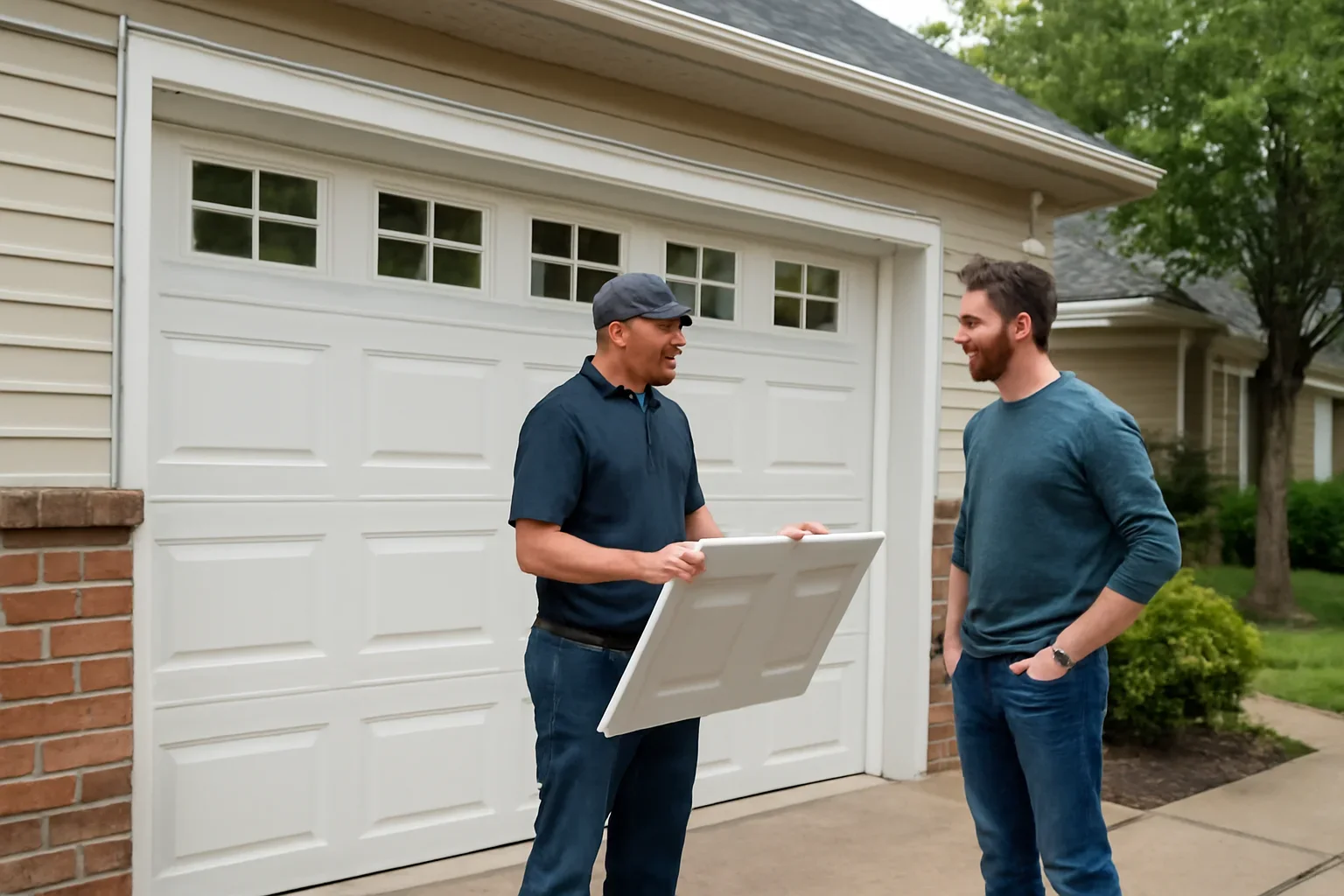
Some damage is mainly cosmetic. Other damage changes how the section carries hinges, rollers, reinforcement, windows, seals, or opener force.
A sharp fold can weaken the panel skin and move hinges, reinforcement, or roller stems out of their normal position.
Cracks near hinges, edges, windows, or reinforcement points can grow as the door bends through the curved track.
A bent section may catch the jamb, rub a track, move rollers sideways, or resist travel as it reaches the horizontal track.
Impact can pull fasteners, distort hinge mounting points, bend roller stems, or change the spacing between sections.
A bowed panel or damaged bottom section may create gaps along the floor, jambs, or joints between sections.
Corrosion, delamination, broken insulation, or separated skins may reduce stiffness and make a matching repair harder.
A damaged section can pull hinges, rollers, tracks, cables, or opener parts out of alignment. Continued operation may turn one damaged panel into a larger door-system problem.
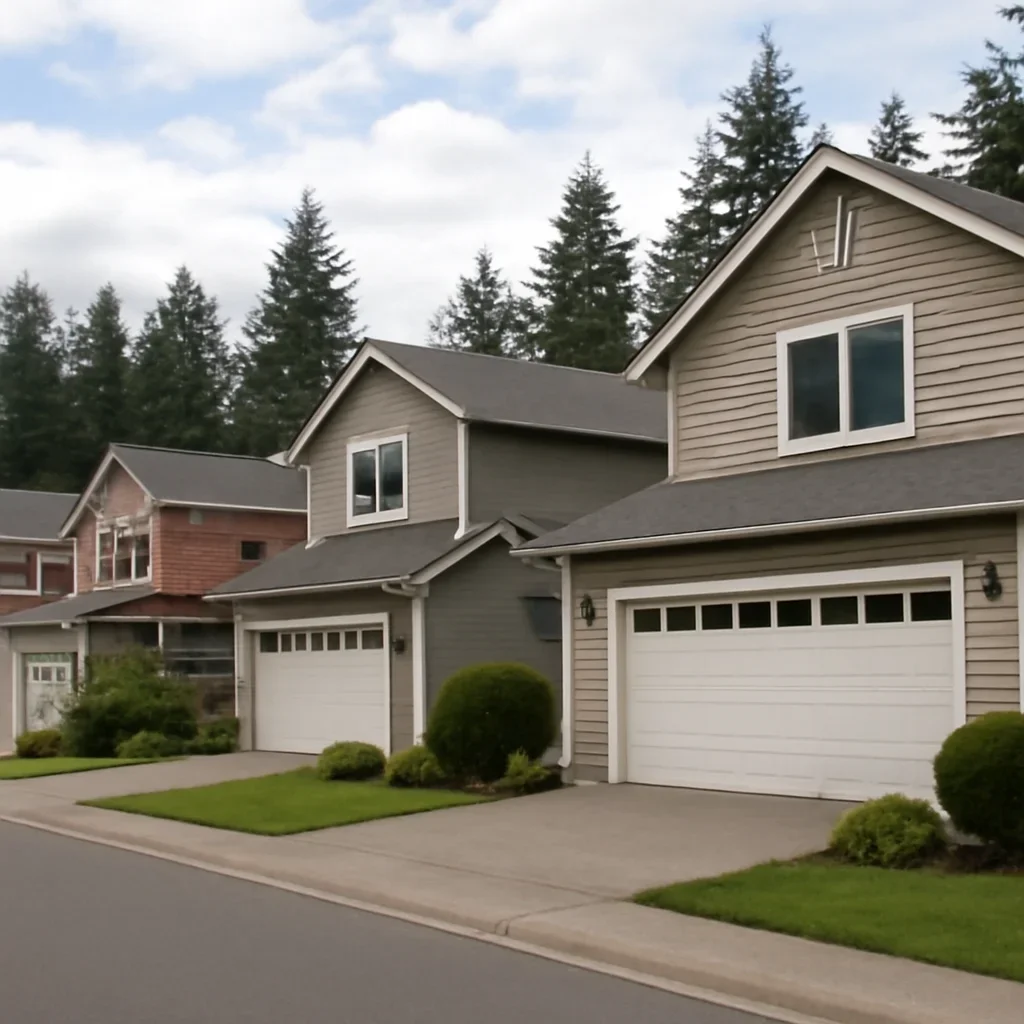
The section itself must be identified, but the inspection should also show whether impact or movement affected the complete door.
The cause helps show whether the repair is limited to one section or whether tracks, rollers, hardware, or the opening also need attention.
A bumper, mirror, hitch, trailer, or equipment edge can crease one section and shift tracks, hinges, or rollers.
Ladders, mowers, bicycles, bins, lumber, workshop tools, or machinery can strike the inside of the door.
A bin, trailer tongue, tool, snow buildup, or stored item can distort the bottom section or force the door out of level.
A displaced roller, bent track, or broken hinge can pull a panel sideways and damage its edge or mounting points.
An opener that keeps pushing or pulling against resistance may bend the top section, bracket, strut, or door arm area.
Wind pressure, moisture, rust, temperature change, and damaged seals can contribute to movement and material wear.
Older sections may crack near hinges, windows, stiles, or reinforcement after years of bending through the tracks.
Incorrect reinforcement, hinge position, fasteners, or panel compatibility can create poor spacing and uneven loading.
The exact process depends on panel availability, damage location, door stability, hardware condition, and whether one section can be matched safely.
Photos, measurements, labels, panel position, colour, texture, windows, and the type of impact help identify the likely match.
A cracked, crooked, partly open, or off-track door needs a safety-first plan before hinges or sections are disturbed.
Hinges, rollers, tracks, reinforcement, springs, cables, bottom fixtures, and opener parts should be checked together.
The proposed section should match the door’s profile, dimensions, thickness, joint shape, insulation, hinge pattern, and weight.
The replacement section, hinges, rollers, reinforcement, seals, and spacing should support smooth movement through the tracks.
The complete door should be checked for level travel, section spacing, track clearance, cable movement, balance, sealing, and opener interaction.
A panel that looks similar from the driveway may still have a different joint, thickness, reinforcement pattern, or weight.
Door width, individual section height, thickness, tongue-and-groove shape, edge design, and hinge locations need to be compatible.
Single-layer, double-layer, insulated, steel-backed, wood, composite, and reinforced sections may have different weight and stiffness.
Colour, fading, embossing, grain, panel pattern, windows, trim, and finish can make an exact visual match difficult on an older door.
Hinges, rollers, struts, top brackets, opener reinforcement, and spring balance must suit the replacement section and full door.
Single-panel replacement may make sense when the rest of the door remains structurally sound, a compatible section is available, and the damage has not spread into the tracks, lifting system, or several adjoining sections.
A complete replacement may be more practical when several sections are damaged, the door is badly rusted or delaminated, matching panels are unavailable, the opening needs a different size, or springs, tracks, hardware, insulation, and the opener all need major work.
Compare the panel option with garage door replacement when the existing door no longer fits the building, vehicle, trailer, workshop, weather-protection, or appearance needs.
Exact pricing depends on the section, door, connected damage, access, and whether a suitable panel can be sourced and installed safely.
Single, double, insulated, reinforced, windowed, wood, steel, shop, and custom sections have different material and handling needs.
Manufacturer, model, age, section profile, colour, insulation, and window pattern affect whether a compatible match is available.
Top, intermediate, and bottom sections use different brackets, fixtures, reinforcement, seals, and handling requirements.
Bent tracks, torn hinges, displaced rollers, loose cables, damaged bottom fixtures, or opener strain can expand the work.
Colour matching, fading, windows, trim, decorative hardware, and exterior finish expectations can affect the practical options.
Gates, longer driveways, gravel, mud, trailers, equipment, high ceilings, detached shops, and storage can affect planning.
Local context matters because larger doors, detached buildings, equipment movement, longer driveways, weather exposure, gravel, moisture, and workshop use can change both the damage and the replacement plan.
Share whether the opening serves daily parking, a detached shop, tools, storage, trailers, trucks, equipment, or another high-use purpose. Door width and height, ceiling clearance, gate access, and the location of the impact also help.
Separate buildings may have larger openings, higher ceilings, different trim, more weather exposure, and less common panel systems.
Hitches, mirrors, mower decks, machinery, tools, and trailer movement can damage lower sections, tracks, hinges, and jambs.
Gate instructions, gravel, mud, snow, parked equipment, turning space, and delivery access can affect service planning.
Wind, rain, damp air, corrosion, fading, debris, and worn seals may affect both the damaged panel and the visual match.
Panel damage may overlap with off-track movement, bent rollers, cable trouble, opener strain, poor sealing, or a broader repair need.
Do not move an unstable door just to take better photos. From a safe position, note:
Keep vehicles, trailers, tools, ladders, bicycles, bins, lumber, mowers, and equipment clear of the door and tracks. Use guides or marked parking points where tight clearances make contact more likely.
Stop the opener when the door binds, scrapes, reverses, or closes on an obstruction. Routine inspection can identify loose hinges, rough rollers, track movement, poor balance, and opener strain before they damage a section.
These answers explain urgency, panel matching, connected damage, repair-versus-replacement decisions, and what helps before an appointment.
It is urgent when the damaged section leaves the door crooked, off-track, partly open, unable to secure the building, separating at a joint, or interfering with hinges, rollers, cables, or tracks. Stop using the door and keep the area clear.
Often, one section can be replaced when a compatible panel is available and the remaining door, tracks, hinges, rollers, springs, cables, and opener remain serviceable. Door model, profile, dimensions, thickness, weight, and appearance all need review.
A structural match may be possible even when colour fading or finish age creates a visible difference. Profile, dimensions, joint shape, insulation, windows, texture, colour, and manufacturer availability determine how close the match can be.
Minor cosmetic dents may not require replacement when the section remains stable and moves correctly. Deep creases, cracks, torn hinge points, separated skins, damaged reinforcement, or alignment problems are more likely to need a replacement comparison.
Yes. A bent section can shift hinges and rollers, rub the tracks, change door balance, damage seals, and make the opener push or pull against extra resistance. Connected parts should be checked before normal operation resumes.
Panel replacement may suit limited damage with an available match. Full-door replacement is worth comparing when several sections are damaged, corrosion is widespread, parts are unavailable, insulation is poor, or the opening needs a different size or function.
Share the Fernridge location, building type, door width and height, damaged section, insulation, windows, colour, labels, current door position, cause of impact, connected hardware damage, gate and driveway details, and clear photos when safe.
Potentially, but larger or less common shop doors may use different section heights, thicknesses, profiles, reinforcement, springs, and hardware. Exact measurements and manufacturer information are especially helpful before compatibility is discussed.
Send the building type, door width and height, damaged section, insulation, windows, colour, labels, current position, cause of impact, visible hinge, roller, track, cable, or opener damage, gate and driveway details, and photos when safe. Keep the door unused if it is crooked, open, scraping, off-track, or unstable.