Deep dent or crease
A sharp fold can weaken the panel skin and move hinges, reinforcement, overlays, window frames, or roller stems out of their normal position.

A dented, cracked, bent, split, rusted, or impact-damaged garage door section can affect more than curb appeal. The damaged panel may change hinge alignment, roller position, weather sealing, reinforcement, door balance, window support, decorative overlays, and how safely the complete door moves.
Fort Langley homes often feature carriage-style doors, decorative windows, overlays, trim, and colours chosen to suit heritage-inspired architecture. The right repair depends on the panel profile, door size, insulation, finish, fading, window layout, manufacturer compatibility, damage location, and whether the tracks or lifting system were affected.
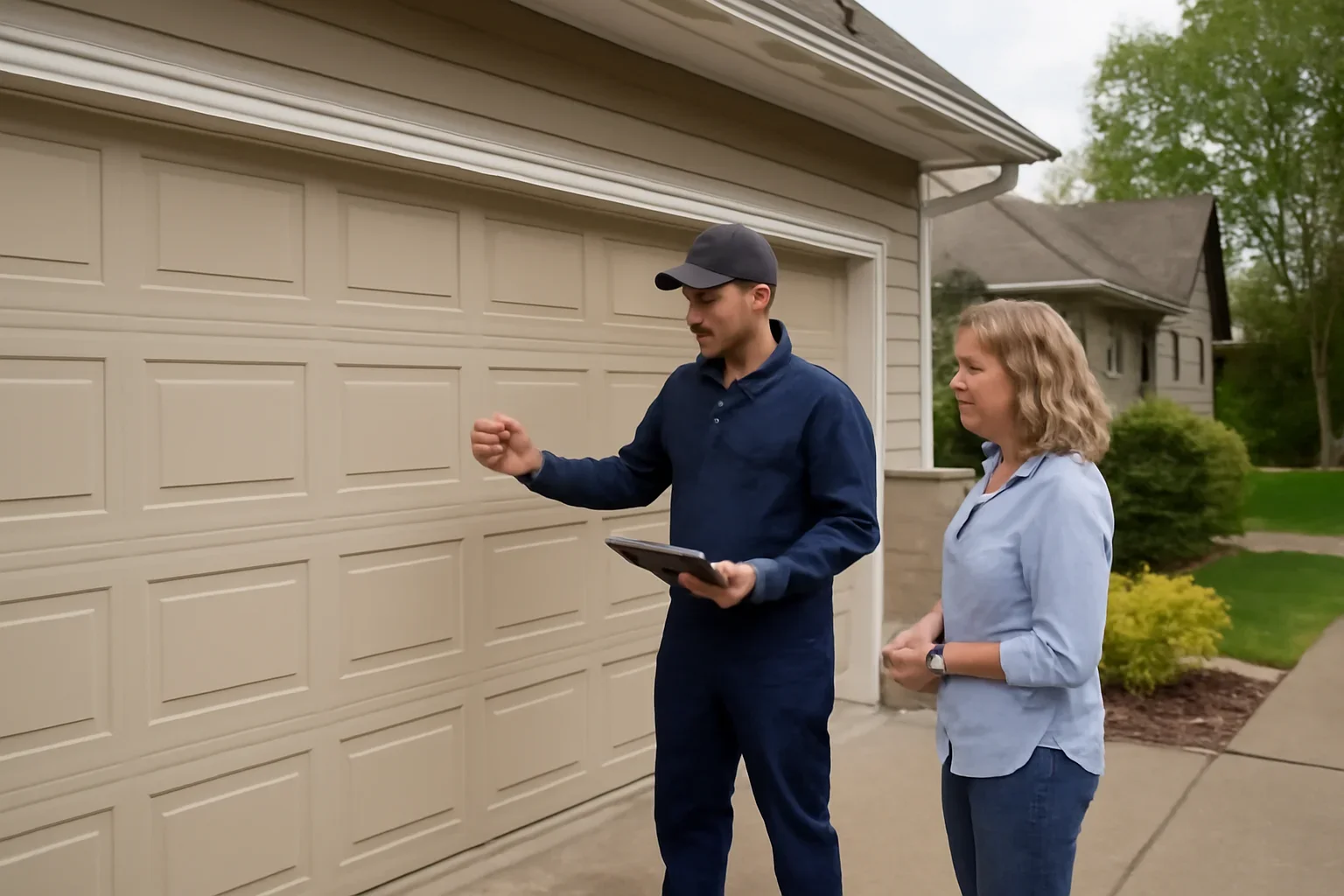
Some damage is mainly cosmetic. Other damage changes how the section carries hinges, rollers, reinforcement, windows, seals, or opener force.
A sharp fold can weaken the panel skin and move hinges, reinforcement, overlays, window frames, or roller stems out of their normal position.
Cracks near hinges, section edges, decorative windows, overlays, or reinforcement points can grow as the door bends through the curved track.
A bent section may catch the jamb, rub a track, move rollers sideways, or resist travel as it reaches the horizontal track.
Impact can pull fasteners, distort hinge mounting points, bend roller stems, or change the spacing between sections.
A bowed panel or damaged bottom section may create gaps along the floor, jambs, decorative trim, or joints between sections.
Corrosion, delamination, broken insulation, or separated skins may reduce stiffness and make a matching repair harder.
A damaged section can pull hinges, rollers, tracks, cables, or opener parts out of alignment. Continued operation may turn one damaged panel into a larger door-system problem.
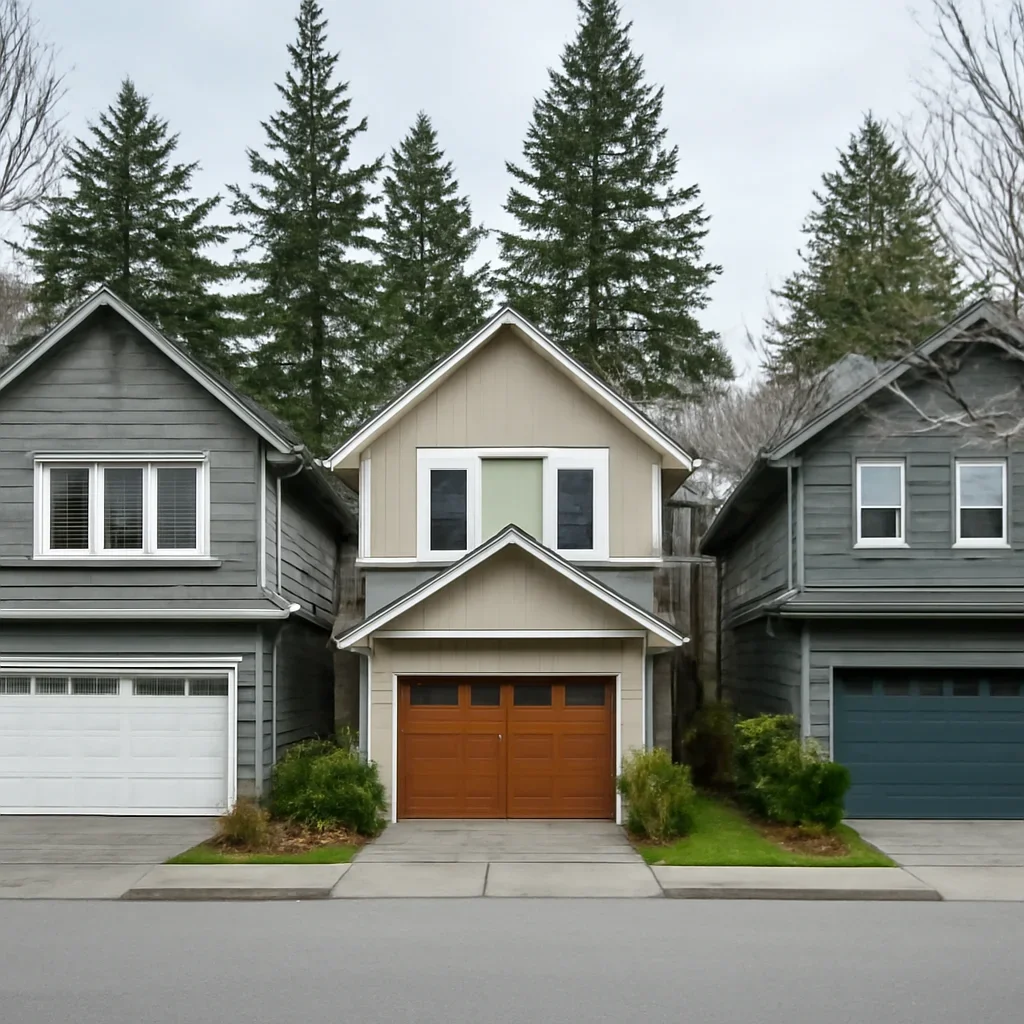
The section itself must be identified, but the inspection should also show whether impact or movement affected the complete door.
The cause helps show whether the repair is limited to one section or whether tracks, rollers, hardware, or the opening also need attention.
A bumper, mirror, bicycle, mower, delivery item, or storage impact can crease one section and shift tracks, hinges, or rollers.
Ladders, bicycles, bins, garden tools, shelving, lumber, or stored household items can strike the inside of the door.
A bin, bicycle, tool, garden item, snow buildup, or stored object can distort the bottom section or force the door out of level.
A displaced roller, bent track, or broken hinge can pull a panel sideways and damage its edge or mounting points.
An opener that keeps pushing or pulling against resistance may bend the top section, bracket, strut, or door arm area.
Wind pressure, moisture, rust, temperature change, and damaged seals can contribute to movement and material wear.
Older sections may crack near hinges, windows, stiles, or reinforcement after years of bending through the tracks.
Incorrect reinforcement, hinge position, fasteners, or panel compatibility can create poor spacing and uneven loading.
The exact process depends on panel availability, damage location, door stability, hardware condition, and whether one section can be matched safely.
Photos, measurements, labels, panel position, colour, texture, fading, overlays, decorative windows, hardware, and the type of impact help identify the likely match.
A cracked, crooked, partly open, or off-track door needs a safety-first plan before hinges or sections are disturbed.
Hinges, rollers, tracks, reinforcement, springs, cables, bottom fixtures, and opener parts should be checked together.
The proposed section should match the door’s profile, dimensions, thickness, joint shape, insulation, hinge pattern, weight, window layout, and decorative design.
The replacement section, hinges, rollers, reinforcement, seals, and spacing should support smooth movement through the tracks.
The complete door should be checked for level travel, section spacing, track clearance, cable movement, balance, sealing, and opener interaction.
A panel that looks similar from the driveway may still have a different joint, thickness, reinforcement pattern, or weight.
Door width, individual section height, thickness, tongue-and-groove shape, edge design, and hinge locations need to be compatible.
Single-layer, double-layer, insulated, steel-backed, wood, composite, and reinforced sections may have different weight and stiffness.
Colour, fading, embossing, grain, panel pattern, overlays, decorative windows, trim, and finish can make an exact visual match difficult on an older door.
Hinges, rollers, struts, top brackets, window support, opener reinforcement, and spring balance must suit the replacement section and full door.
Single-panel replacement may make sense when the rest of the door remains structurally sound, a compatible section is available, and the damage has not spread into the tracks, lifting system, decorative windows, overlays, or several adjoining sections.
A complete replacement may be more practical when several sections are damaged, the door is badly rusted or delaminated, matching carriage-style panels or windows are unavailable, the appearance difference would be too noticeable, or springs, tracks, hardware, insulation, and the opener all need major work.
Compare the panel option with garage door replacement when the existing door no longer fits the building, vehicle, trailer, workshop, weather-protection, or appearance needs.
Exact pricing depends on the section, door, connected damage, access, and whether a suitable panel can be sourced and installed safely.
Single, double, insulated, reinforced, windowed, wood, steel, carriage-style, overlay, and custom sections have different material and handling needs.
Manufacturer, model, age, section profile, colour, fading, insulation, overlay design, decorative hardware, and window pattern affect whether a compatible match is available.
Top, intermediate, and bottom sections use different brackets, fixtures, reinforcement, seals, and handling requirements.
Bent tracks, torn hinges, displaced rollers, loose cables, damaged bottom fixtures, or opener strain can expand the work.
Colour matching, fading, decorative windows, overlays, trim, handles, strap hinges, and exterior finish expectations can affect the practical options.
Street parking, narrow driveways, landscaping, vehicles, bicycles, finished walls, detached garages, and storage can affect planning.
Local context matters because carriage-style designs, decorative windows, overlays, older finishes, established openings, exterior detailing, and curb-appeal expectations can change both the damage and the replacement plan.
Share whether the door has decorative windows, overlays, wood-look finishes, handles, strap hinges, custom trim, or a colour that has faded over time. Door width and height, panel position, driveway access, and the impact location also help.
Decorative panel patterns, cross-buck overlays, plank-look sections, handles, and strap hinges may be difficult to match on older doors.
Arched, divided-light, frosted, or custom window inserts may affect panel availability, weight, privacy, and the final visual match.
Mixed-age panels, changed trim, repainted finishes, previous repairs, older hardware, and settled openings can affect replacement planning.
Colour, fading, siding, masonry, trim, entry doors, windows, lighting, and landscaping can make appearance differences more noticeable.
Panel damage may overlap with off-track movement, bent rollers, cable trouble, opener strain, poor sealing, or a broader repair need.
Do not move an unstable door just to take better photos. From a safe position, note:
Keep vehicles, bicycles, tools, ladders, bins, garden equipment, lumber, and storage clear of the door and tracks. Use guides or marked parking points where tight clearances make contact more likely.
Stop the opener when the door binds, scrapes, reverses, or closes on an obstruction. Routine inspection can identify loose hinges, rough rollers, track movement, poor balance, and opener strain before they damage a section.
These answers explain urgency, panel matching, connected damage, repair-versus-replacement decisions, and what helps before an appointment.
It is urgent when the damaged section leaves the door crooked, off-track, partly open, unable to secure the home, separating at a joint, or interfering with hinges, rollers, cables, or tracks. Stop using the door and keep the area clear.
Often, one section can be replaced when a compatible panel is available and the remaining door, tracks, hinges, rollers, springs, cables, and opener remain serviceable. Profile, dimensions, thickness, weight, windows, overlays, and appearance all need review.
A structural match may be possible even when fading, colour, texture, grain, overlays, decorative windows, trim, or hardware create a visible difference. Manufacturer availability and the age of the existing door affect how close the match can be.
Minor cosmetic dents may not require replacement when the section remains stable and moves correctly. Deep creases, cracks, torn hinge points, damaged window support, separated skins, bent reinforcement, or alignment problems are more likely to need a replacement comparison.
Yes. Impact can crack window frames, shift inserts, loosen overlays, distort trim, or change the section shape around decorative details. These parts should be documented when matching and repair options are reviewed.
Panel replacement may suit limited damage with an available structural and visual match. Full-door replacement is worth comparing when several sections are damaged, matching carriage-style panels are unavailable, fading is significant, or the complete door needs major hardware and insulation work.
Share the Fort Langley location, building type, door width and height, damaged section, insulation, windows, colour, fading, overlays, decorative hardware, labels, current position, cause of impact, connected damage, driveway access, and clear photos when safe.
That is part of the comparison. Panel profile, colour, fading, texture, windows, overlays, trim, hardware, and the surrounding exterior should be reviewed so the structural repair and visible result can both be considered.
Send the building type, door width and height, damaged section, insulation, windows, colour, labels, current position, cause of impact, visible hinge, roller, track, cable, or opener damage, gate and driveway details, and photos when safe. Keep the door unused if it is crooked, open, scraping, off-track, or unstable.