Heavy, stuck or short movement
Spring trouble, a loose cable, a jammed roller, track resistance, opener strain or a disconnected trolley can prevent normal lifting.
Review opening problems
Get practical help when your garage door is stuck, crooked, unusually heavy, noisy, off track, reversing or no longer opening and closing reliably.
Springs, cables, rollers, tracks, hinges, panels, sensors and the opener work as one connected system. A useful repair starts by identifying the actual failure, checking what else has been affected and explaining the appropriate next step before work proceeds.
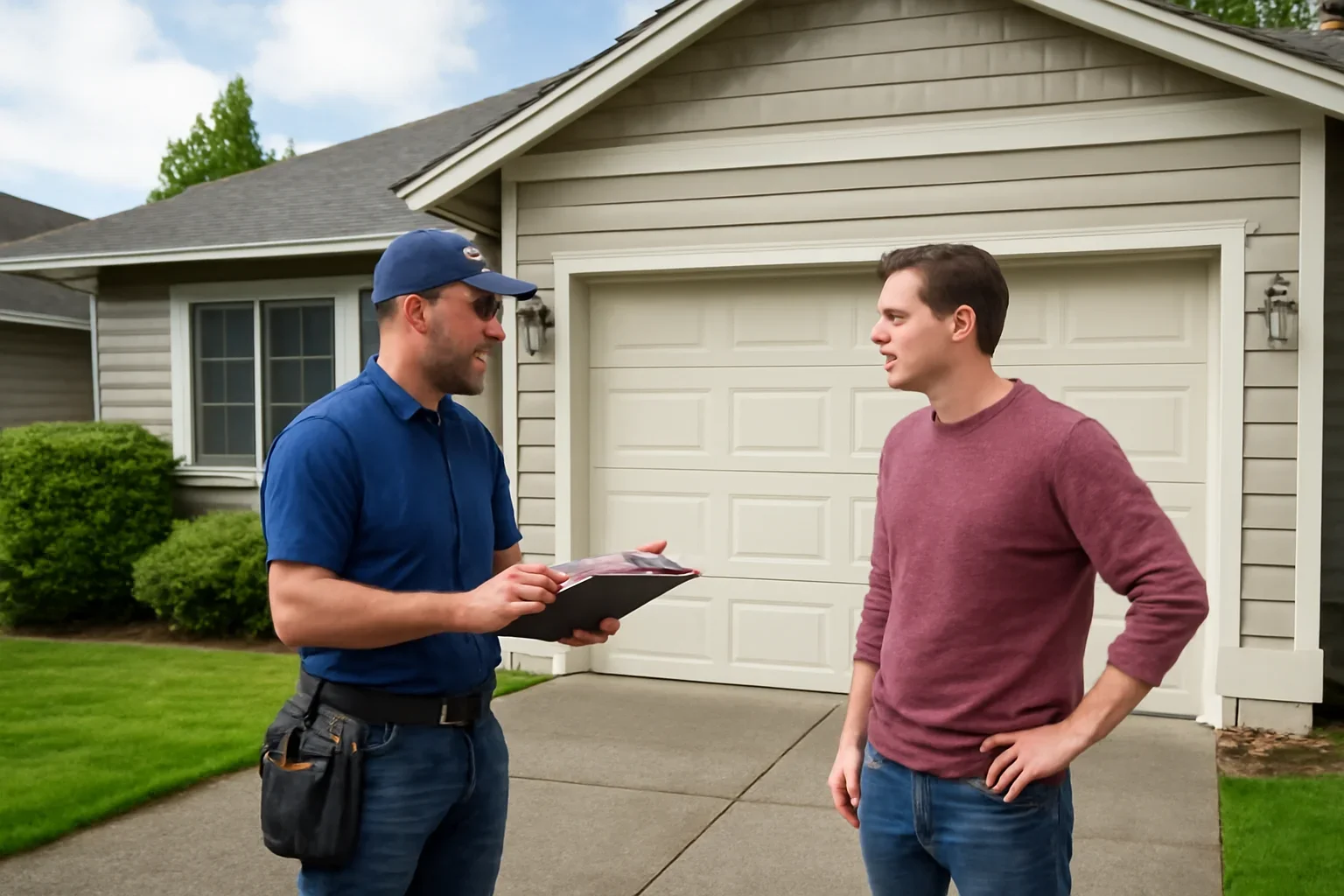
Start here when the door is stuck, heavy, slow, uneven or moving only a short distance.
Repeated scraping, popping, shaking, reversal or rough travel can point to connected hardware or balance problems.
Check same-day availability when a vehicle is trapped, the opening cannot be secured or the door appears unstable.
Similar symptoms can have different causes. The current door position, visible damage, sound and opener response all help narrow the repair path.
Spring trouble, a loose cable, a jammed roller, track resistance, opener strain or a disconnected trolley can prevent normal lifting.
Review opening problemsCable, drum, spring, roller, track or bottom-fixture trouble can cause one side of the door to rise or fall differently from the other.
Review cable repairWorn rollers, loose hinges, damaged track, poor balance, impact damage or opener strain may create noise and resistance during travel.
Review track-related repairSensor alignment, obstructions, travel settings, floor contact, track resistance or a binding section can interrupt dependable closing.
Review closing problemsYou do not need to diagnose the door yourself. Describe its current position, what happens when the wall control is pressed, any recent bang or impact, visible damage and whether access or security is affected.
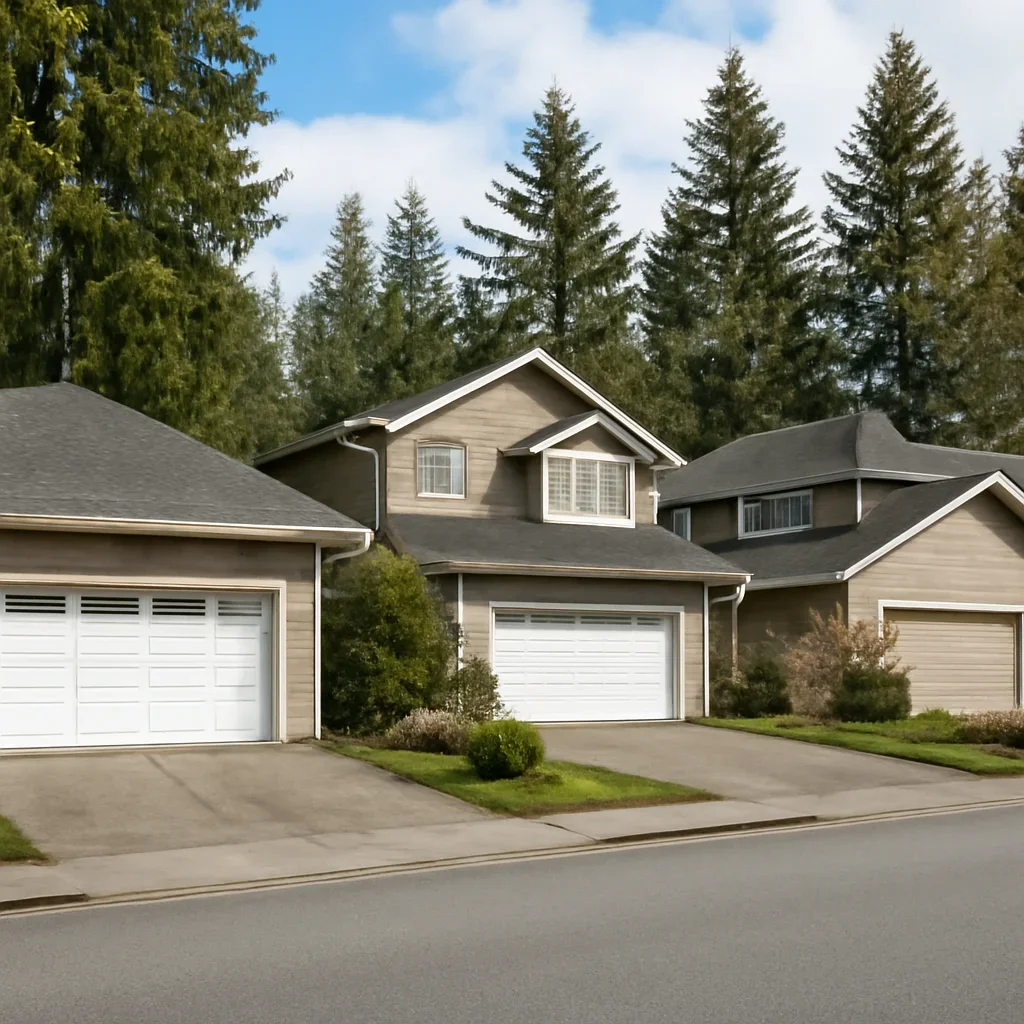
Glen Valley is part of the Township of Langley and includes rural residential and agricultural surroundings. A service address may involve an attached garage, detached building, storage space or working shop rather than a standard suburban two-car garage.
Door size, daily use, moisture exposure, ceiling layout, previous repairs and access to the building can all change the repair scope. Longer driveways, gates, parked equipment and detached structures are worth mentioning before the appointment so the visit can be planned properly.
Share the full service address, nearest access point, gate instructions, which building contains the door, approximate door size and whether a vehicle, trailer or equipment is blocking the work area.
Stop operating the system when movement is unstable, the lifting system appears damaged or another cycle could pull the door farther out of alignment.
A sudden bang, heavy door or short lift can indicate that the spring system is no longer supporting the door correctly.
Uneven cable support can leave one side low, twist the door and place extra force on tracks, hinges and panels.
An off-track or crooked section can shift unexpectedly and should not be forced back into position.
Keep people, pets and vehicles clear when the door cannot be secured, is supported unevenly or appears likely to move without warning.
These parts can remain under significant tension. Avoid repeatedly pressing the opener, forcing the door by hand or standing beneath an unstable section. Use the same-day repair path when access, security or immediate safe use is affected; availability depends on scheduling, travel conditions and parts.
The goal is to find the source of the problem, identify connected damage and avoid replacing parts that remain compatible and serviceable.
Review recent sounds, impact, changes in movement, visible damage, opener behaviour and whether the door can be inspected or tested safely.
Check springs, cables, drums, tracks, rollers, hinges, panels, balance, opener components, controls, sensors, seals and floor contact.
Compare the failed part, secondary damage, compatible parts, adjustment needs, urgency and any repair-versus-replacement decision before proceeding.
The initial symptom may involve one component or several connected parts. These pages explain the most common repair categories in more detail.
Relevant after a loud bang, visible spring gap, unusually heavy door or a door that rises only a short distance.
Review spring repairRelevant for loose, frayed, snapped or off-drum cables and a door that hangs lower on one side.
Review cable repairRelevant when rollers leave the track, a section jams, the track is bent or the door becomes crooked and unstable.
Review off-track repairRelevant for dents, cracks, impact damage, rust or a damaged section that changes alignment or sealing.
Review panel replacementRelevant when the motor hums, controls stop responding, the trolley fails to move or automatic travel becomes inconsistent.
Review opener repairRelevant when the door will not close, reverses unexpectedly or the sensor lights show alignment or wiring trouble.
Review sensor repairRelevant when the door feels heavy, drifts, slams, rises by itself or makes the opener work harder than expected.
Review balance serviceRelevant for routine inspection, testing and identifying wear before it becomes a breakdown or access problem.
Review maintenanceRepair may be practical when the fault is limited, the door remains structurally serviceable and suitable components can restore safe, balanced and dependable movement.
Replacement may deserve consideration when several major parts are worn, structural damage is widespread or repair would leave a system with continuing reliability and compatibility concerns.
The final scope depends on what failed, whether the failure caused secondary damage and which parts are suitable for the specific door, building and opener.
Single, double, insulated, wood, glass, custom and larger workshop doors can require different hardware, springs and handling.
A door stuck open, closed, crooked or blocking equipment may need stabilization before the main repair can begin.
Spring size, cable length, roller type, track layout, panel profile and opener model affect which components are appropriate.
A failed spring, cable, roller or impact may also affect drums, tracks, hinges, panels, reinforcement or opener components.
Repair costs vary with the failed component, door size, access, urgency, parts and connected damage. Use the cost guide for planning, then request service or an estimate for the actual door.
Clear information can help identify the likely service path, urgency, access needs and whether specialized parts may be involved.
State whether the door is open, closed, partly open, crooked, off track or blocking a vehicle, trailer, equipment or essential building access.
Mention a loud bang, impact, new noise, slower travel, one-sided movement, reversal, visible damage and what happens when the control is pressed.
Include the Glen Valley address, gate or driveway instructions, building location, approximate door size, opener model and safe photos.
Include full interior and exterior views, close-ups of visible damage, the opener label and safely visible tracks, rollers, cables or spring area. Do not stand beneath an unstable door or touch damaged tension components.
These answers explain common repair decisions, safety concerns and the information that helps prepare for a Glen Valley service visit.
Book a repair assessment when the door becomes noisy, heavy, uneven, unreliable, stuck, slow or visibly damaged. Stop using it and arrange prompt help if it is crooked, off track, supported by a loose cable or has a visibly broken spring.
Not always. A moving door can still have worn cables, poor balance, damaged rollers, loose hinges, track resistance or opener strain. Leave it unused when movement is uneven, harsh or visibly unstable.
One-sided movement may involve a loose or damaged cable, drum trouble, uneven spring force, a jammed roller, bent track or damage near a bottom fixture. Continued use can pull the door farther out of alignment.
Yes. The opener is intended to guide a properly balanced door, not lift its full weight. A weak spring, binding track or uneven movement can place extra load on the motor, rail, trolley, gear, belt or chain.
Sometimes. A single component may be repaired or replaced when the rest of the system remains compatible and serviceable. Connected hardware should still be checked because one failure can change alignment or damage another part.
Replacement may be worth comparing when several major parts are failing, panels have widespread structural damage, compatible components are unavailable or repair would leave an unreliable door with more near-term work expected.
It can. Building access, door size, ceiling and track layout, available power, daily use and the distance from the main residence may affect diagnosis, parts planning and appointment access.
Share the service address, gate instructions, building location, current door position, approximate size, visible damage, recent impact, unusual sounds, opener behaviour, photos and preferred timing.
No. Same-day availability depends on the time of the request, scheduling, travel conditions, door condition and parts. Clearly state when a vehicle is trapped, the opening cannot be secured or the door appears unsafe.
Tell us whether the door is open, closed, crooked, noisy, heavy, reversing, off track or not responding to the opener. Include the Glen Valley address, access details, visible damage, photos and preferred timing.