A gap appears in a torsion spring
A separated coil above the door is a common visible sign of a broken torsion spring. Leave the door in place rather than testing it repeatedly.
Review spring repair
Get practical help when a garage door spring breaks, loses tension or no longer supports smooth, balanced door movement.
Spring symptoms can include a loud snap, a visible gap in a torsion spring, an unusually heavy door, short movement or one side lifting differently. Because springs work with cables, drums, tracks and the opener, the complete lifting system should be checked before the repair scope is confirmed.
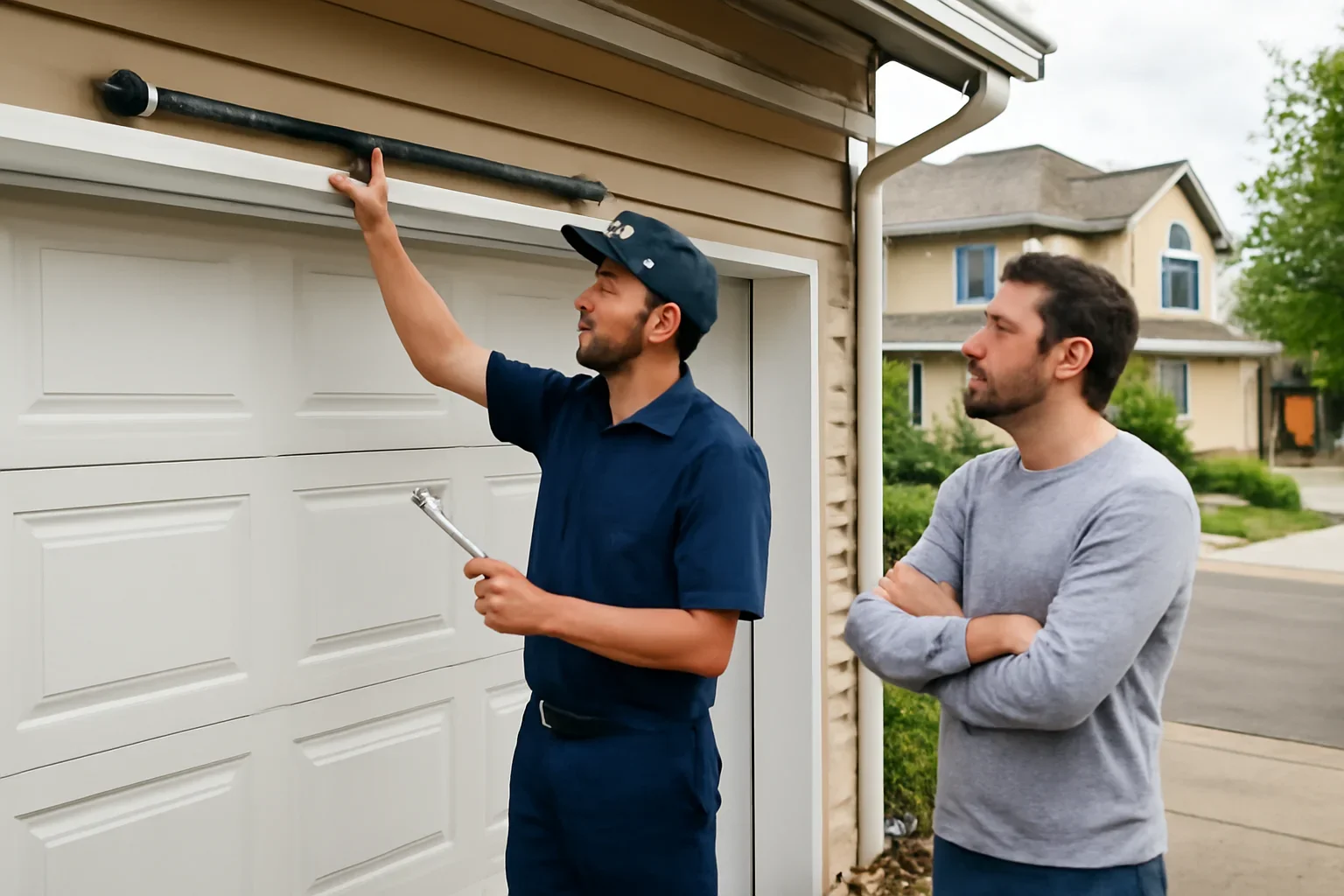
A sudden sound followed by a heavy or non-moving door can indicate a broken spring or another lifting-system failure.
Weak or failed spring support can make manual movement difficult and place extra strain on the opener.
Check same-day availability when the door cannot open safely, remains unsecured or affects essential access.
Similar symptoms can involve springs, cables, drums, rollers, tracks or the opener. The current door position and visible condition help identify the safest service path.
A separated coil above the door is a common visible sign of a broken torsion spring. Leave the door in place rather than testing it repeatedly.
Review spring repairWhen spring support is reduced, the door may move only a short distance, stop, close quickly or become difficult to control manually.
Review opening problemsA spring or cable problem can leave the door crooked, pull one side lower and place uneven load on tracks, rollers, hinges and panels.
Review cable repairThe opener may still respond even when the spring system is no longer balancing the door. Continued operation can add strain to the drive system.
Review opener repairDescribe any loud sound, the current door position, how far the door moves, whether one side looks lower and what happens when the wall control is pressed. Photos should be taken only from a safe distance.
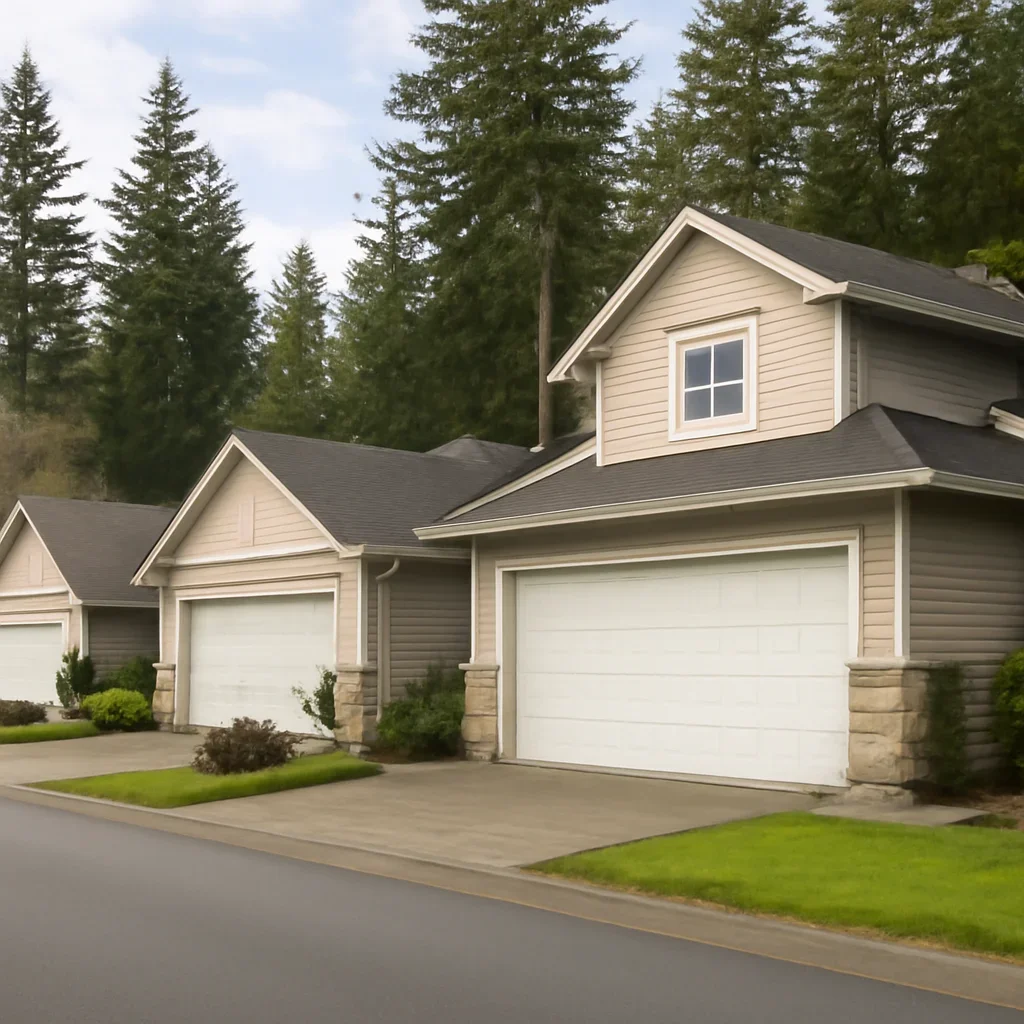
Glen Valley properties can include homes on acreages, farms, detached garages, storage buildings and working shops. Door openings may be wider, taller, heavier or used more frequently than a typical attached residential garage.
Spring repair should be based on the door's dimensions, construction, insulation, windows, hardware and operating demands. Longer driveways, gates, separate buildings and parked equipment are also useful to mention when arranging the service visit.
Share the full address, gate instructions, which building contains the door, approximate door size, current door position and whether a vehicle, trailer or equipment is trapped or blocking the work area.
Stop operating the system when the spring or connected lifting hardware appears damaged, the door is unstable or another cycle may worsen the failure.
A gap in the coil or a visibly displaced spring indicates that the lifting system should not be tested or adjusted by the homeowner.
Loose cable support can leave one side lower and create unpredictable movement through the tracks.
Keep people, pets and vehicles away when the door is hanging unevenly or no longer supported in a stable position.
Repeated opener use will not restore spring support and may add stress to the motor, trolley, rail, belt, chain or gear system.
Springs, cables, drums and bottom fixtures can remain under significant tension. Do not loosen fasteners, pull cables, disconnect an unstable door or attempt to lift a heavy door alone. Keep the area clear and arrange an assessment instead.
The assessment should identify the spring system, confirm the door's requirements and check for connected damage before suitable parts are selected.
Review the visible spring condition, recent sound, current door position, opener behaviour and whether the system can be approached safely.
Check springs, cables, drums, bearings, tracks, rollers, hinges, panels, bottom fixtures, balance and opener strain.
Confirm the suitable spring specification and approved connected repairs, then test balanced movement and opener operation after the work is complete.
The spring arrangement should be identified before parts or repair scope are discussed. Each system uses different locations and connected hardware.
Torsion systems commonly use one or more springs on a shaft above the door. The shaft, drums, cables, bearings and spring support should be considered together when a failure occurs.
Extension systems use springs that stretch as the door closes. The springs, pulleys, cables, attachment points and safety-restraint setup should be assessed as one connected system.
A targeted spring repair may be practical when the door structure and connected lifting hardware remain serviceable and suitable parts can restore balanced operation.
A wider repair may be needed when the spring failure has affected cables, drums, bearings, tracks, panels or the opener, or when the door was already moving poorly before the spring failed.
Spring replacement is not based only on the appearance of the old spring. Door size, weight, construction and connected hardware affect the correct repair plan.
Larger, taller, insulated, windowed or custom doors can require different spring specifications than lighter residential doors.
Torsion and extension systems use different components, layouts and repair requirements.
Connected wear or damage can change the work beyond replacing the failed spring alone.
A door stuck open, closed or crooked may need careful stabilization before the spring system can be serviced.
The final scope depends on the spring system, door requirements, access, connected damage and suitable parts. Use the cost guide for planning, then request service for the actual door.
Clear details can help identify urgency, access needs, likely spring-system type and whether connected hardware may also require attention.
Mention a loud bang, when it occurred, whether the door is open, closed or partly open and whether one side appears lower.
State whether the motor runs, the door moves only a few inches, the rail shakes or the opener stops quickly under load.
Include a full interior view from a safe distance, the opening, opener label, Glen Valley address, gate instructions and building location.
Do not stand under an unstable door, climb near the spring system or touch loose cables and brackets. A wider photo taken from a safe position is more useful than a risky close-up.
These answers explain common warning signs, connected components, service urgency and what information helps before booking.
Common signs include a loud snap, a visible gap in a torsion spring, an unusually heavy door, movement of only a few inches or one side lifting differently. A professional assessment should confirm the cause.
Continued opener use is not recommended. The opener is designed to guide a balanced door, not replace spring support. Repeated operation can add strain to the motor, rail, trolley, belt, chain or gear system.
A door without proper spring support can be extremely heavy and difficult to control. Do not try to lift it alone or disconnect an opener while the door is in an unstable position. Arrange an assessment instead.
Yes. When a system uses more than one spring, the complete spring set, age, wear, door requirements and connected hardware should be assessed before the repair scope is approved.
It can. A spring failure may affect door balance, cable position, drums and opener load. Continued operation or uneven movement can increase the chance of connected damage.
Springs wear through operating cycles and can also be affected by corrosion, unsuitable sizing, previous adjustment, door-weight changes or broader hardware problems. The exact cause cannot be confirmed from the break alone.
No. They use different layouts and connected hardware. The existing system, door requirements and condition should be identified before suitable parts and repair scope are selected.
Door width, height, weight, insulation, windows, hardware and operating demands all affect spring requirements. A larger or frequently used door should not automatically receive the same setup as a lighter residential door.
Share the service address, gate and building instructions, current door position, recent sounds, visible spring or cable condition, opener behaviour, approximate door size, safe photos and preferred timing.
No. Availability depends on scheduling, travel conditions, safe access, diagnosis and suitable parts. Clearly state when a vehicle is trapped, the door is unstable or the opening cannot be secured.
Tell us whether there was a loud snap, the door feels heavy, one side looks lower or the opener moves the door only a short distance. Include the door position, safe photos and Glen Valley access details.