Stop pressing the controls
Do not repeatedly use the remote, keypad or wall control. The opener can pull against a jammed or uneven door and increase strain on connected parts.

Get help with a garage door that is crooked, jammed, partly open or no longer moving safely inside its tracks.
An off-track garage door should not be forced with the opener or pushed back into position by hand. Continued movement can damage rollers, cables, brackets, panels and the opener while making the door less stable.
Tell us where you are in Willoughby, whether the door is open or closed, and what happened before it moved out of position. You do not need to identify the failed part before requesting service.
Same-day availability depends on the Willoughby address, current scheduling, access conditions, damage and required parts.
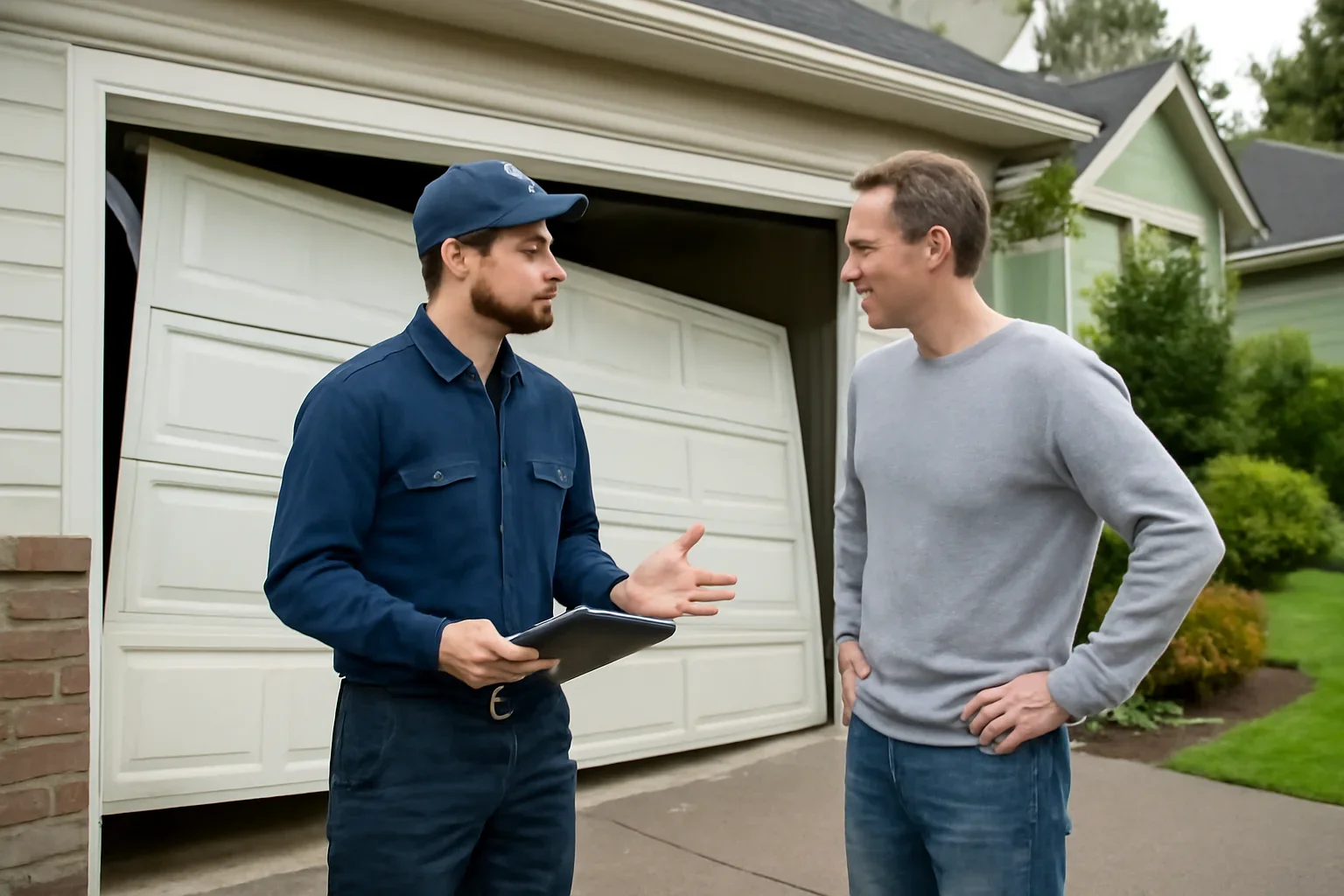
Protect the area first. A few careful steps can reduce the chance of added damage while you arrange an assessment.
Do not repeatedly use the remote, keypad or wall control. The opener can pull against a jammed or uneven door and increase strain on connected parts.
Keep children, pets, vehicles and stored items away from the door. Do not stand beneath a raised door that appears unstable.
Note which side is lower, whether a roller is outside the track, whether a cable looks loose and whether the door was struck or blocked before the problem began.
An off-track door may still be carrying substantial weight through its springs, cables, drums, hinges and brackets. A loose cable does not mean the system is free of tension.
Do not remove bottom brackets, loosen spring hardware, force rollers into the track or try to level the door manually. Clearly describe the condition when booking so the request can be reviewed with the correct safety and access context.
The visible problem may involve one roller, one side of the door or several connected parts. Stop operation when movement becomes uneven or unstable.
A cable, roller, drum, spring or track issue may allow one side to move while the other side remains in place.
The roller may have escaped through a bent, separated or misaligned part of the track. Avoid moving the door further.
A door that moves only partway and then twists or binds should not be forced with the opener.
Keep clear of the cable and nearby brackets. Cable displacement may affect the balance and support of the door.
Metal contact, panel movement or a roller binding against the track can create sudden scraping or impact sounds.
The opener may be pulling against resistance created by the door, track, rollers, cables or balance system.
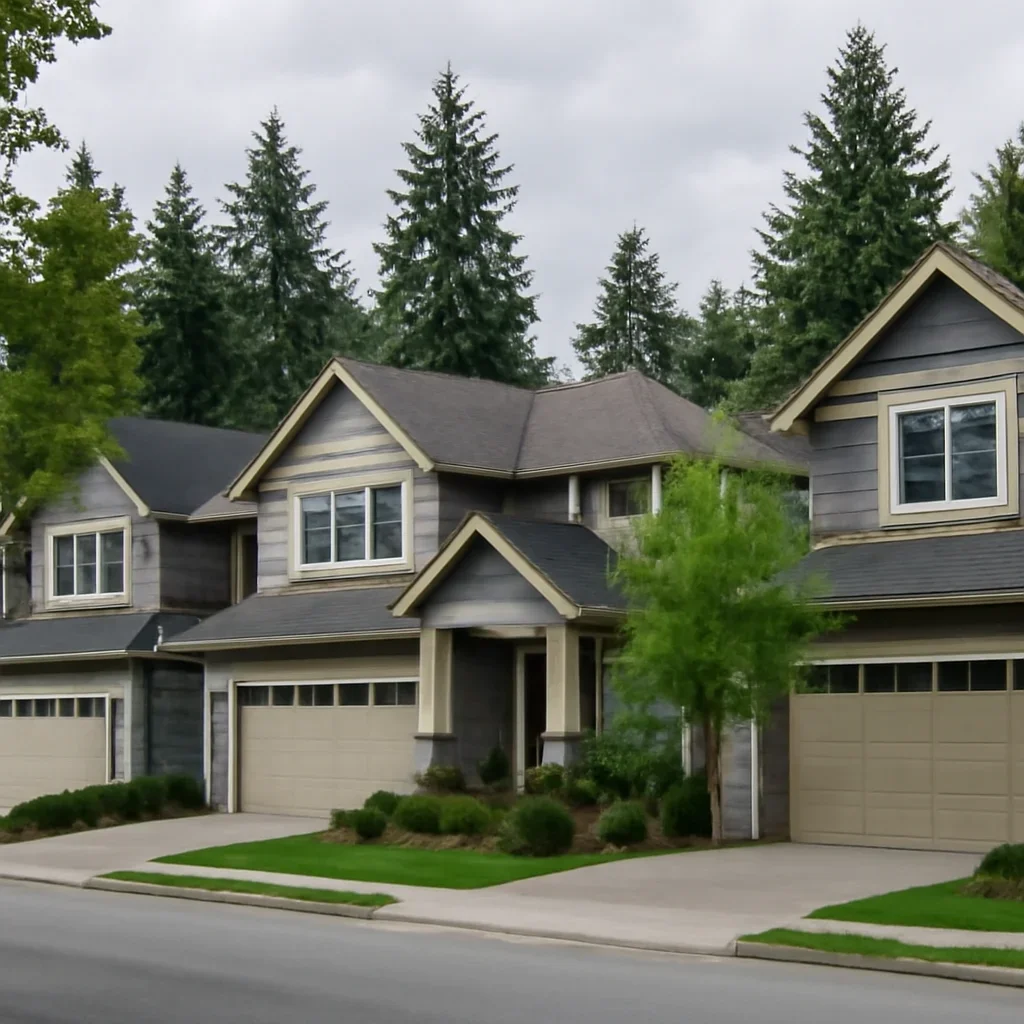
Willoughby includes newer detached homes, townhouse developments, strata properties and growing residential neighbourhoods across the Township of Langley. Garage access can vary from full driveways to shared lanes, visitor-parking areas and compact ground-level garages.
In a townhouse complex, an off-track door may block a narrow garage opening while also limiting space around the tracks and opener. Strata access rules, visitor parking and gate instructions may affect how an appointment is arranged.
Detached homes may have wider insulated doors, attached living space and frequent opener use. When a wider door becomes uneven, the condition of both sides, the spring system and the opener connection should be considered rather than focusing only on the first displaced roller.
The same visible symptom can have different causes. A responsible repair decision should consider the entire door system before parts are adjusted or replaced.
A worn roller, loose hinge or damaged mounting point can change how the door travels through the track.
Impact, loose brackets or movement in the track assembly can create a gap or obstruction that allows a roller to leave its path.
When one side loses support or tension, the door may lift unevenly, twist and bind inside the opening.
Contact with a vehicle, stored item or object in the opening can affect panels, rollers, tracks and alignment.
Off-track conditions should not be ignored. The practical urgency depends on stability, access, security and the current position of the door.
You do not need technical knowledge. Clear observations about the property and door position are more useful than guessing which part failed.
Include the full service address, postal code and any townhouse, strata, gate or parking instructions.
State whether it is open, closed, partway, leaning, twisted or resting unevenly.
Mention any impact, obstruction, snapping sound, sudden drop, shaking or gradual change in movement.
Describe a roller outside the track, loose cable, bent track, damaged hinge or panel gap without touching the parts.
Explain whether a vehicle is trapped, the garage is unsecured or the door blocks the household’s normal entrance.
Full-door and visible-damage photos may help, but do not stand beneath the door or move parts to obtain them.
Realigning one roller may not resolve the cause. The door should be reviewed as a connected system before normal operation resumes.
The current door position, support, access and visible damage should be understood before movement is attempted.
Tracks, rollers, hinges, cables, drums, brackets and door sections may need to be compared from side to side.
The assessment should consider impact, worn parts, loose hardware, cable problems, balance and opener strain.
Repair, part replacement or broader door work can be discussed according to the condition found.
These pages provide broader repair, opener, urgent-service and local coverage information.
These answers explain the main safety, urgency and booking considerations without asking you to diagnose the system yourself.
No. Stop using the opener and avoid moving the door by hand. Further operation can increase damage to rollers, tracks, cables, panels and the opener while making the door less stable.
Do not force the roller or loosen the track. The door may be unevenly supported, and nearby cables, springs, brackets and drums may still be under tension. The cause should be assessed before the system is moved or realigned.
An uneven door may involve a displaced cable, roller problem, track damage, drum issue, spring imbalance or another connected failure. Stop operation rather than trying to level the door manually.
It is more urgent when the door is unstable, stuck open, blocking a vehicle, preventing access or leaving the property unsecured. State the current door position when booking.
The opener may contribute strain when it continues pulling against an obstructed, unbalanced or damaged door. However, the track, rollers, cables, hinges and balance system should also be checked before assuming the opener is the only cause.
Not always. The correct next step depends on whether the track is bent, separated, loose, damaged by impact or still suitable after the underlying problem is corrected.
Include the unit address, strata or gate instructions, visitor parking limits, shared-lane access and whether property management must approve or coordinate the work.
Not necessarily. Completion depends on the damage, diagnosis, required parts, door condition and whether connected components were affected. The appropriate next step can be discussed after the system is assessed.
A full interior view, full exterior view and clear image of visible track, roller or panel damage may help. Do not stand beneath an unstable door or touch a loose cable to take a photo.
Include your Willoughby address, the current door position, visible damage, unusual sounds and whether the garage can still be secured. You do not need to identify the failed part.
Scheduling is confirmed according to current availability.