New opener installation
Add powered operation to a garage door that is currently opened by hand or has been prepared for an opener during construction.

Install an opener that matches your garage door, property layout and daily routine, with options for quieter operation, reliable controls and convenient smart access.
Willoughby includes newer detached homes, townhomes and attached garages where the opener may operate close to bedrooms, living spaces or neighbouring units. Noise level, door weight, available ceiling space and control features should therefore be considered before selecting a unit.
A proper installation begins with the garage door itself. The door should move smoothly and remain correctly balanced before a new motor is expected to lift it through repeated daily cycles.
Prefer to discuss the garage first? Call +1 (844) 822-2211
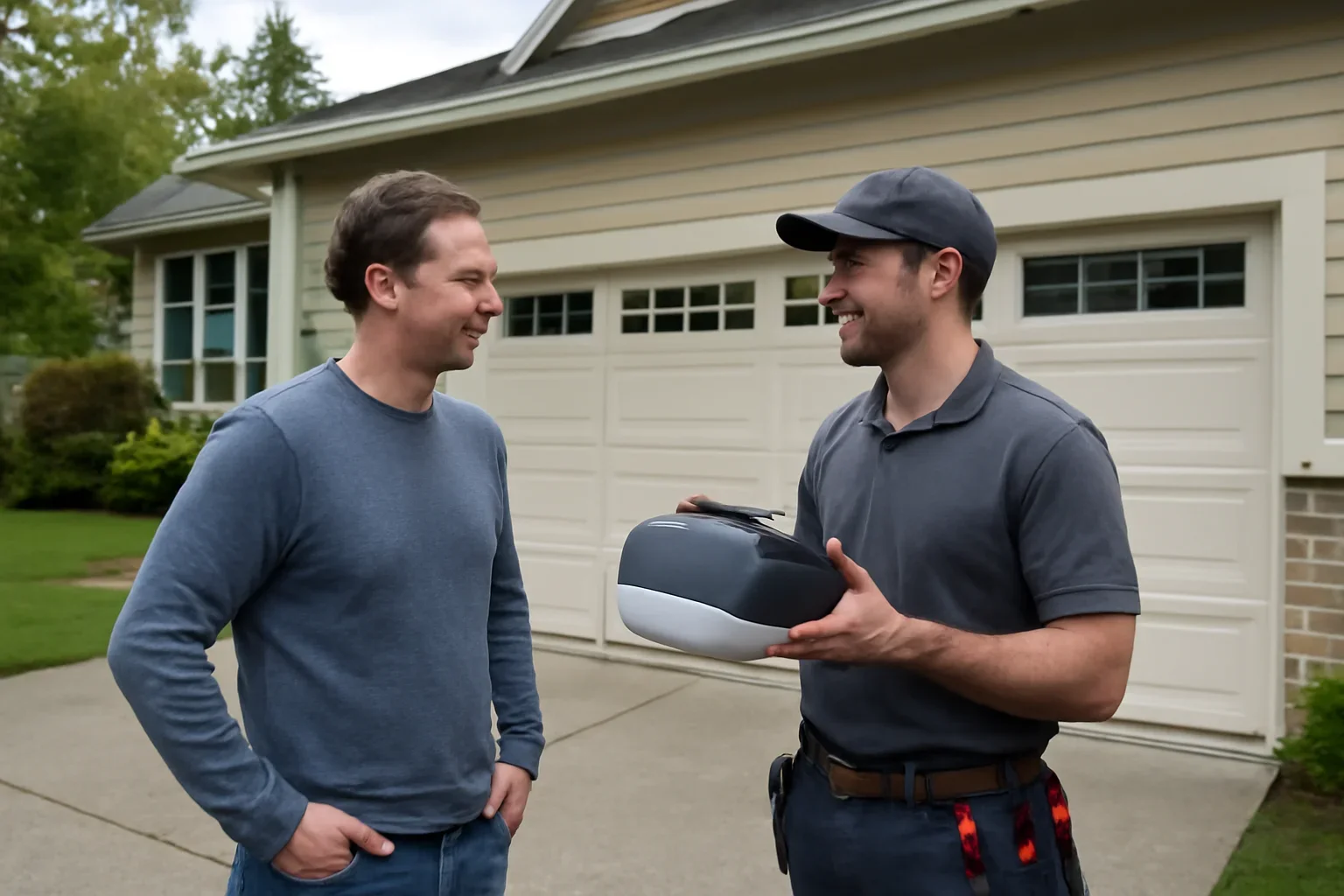
The best starting point depends on whether the garage has no opener, an aging unit, a failed motor or a system that no longer provides the convenience and control you need.
Add powered operation to a garage door that is currently opened by hand or has been prepared for an opener during construction.
Replace a noisy, unreliable or outdated unit while reviewing the existing rail, controls, sensors and door condition.
Review opener replacementAdd compatible app control, status alerts, exterior keypad access or updated remotes when supported by the selected system.
Compare drive systems and mounting considerations when noise and vibration can be heard in nearby rooms or adjoining homes.
Compare belt and chain driveDescribe what the existing opener is doing. A failed remote, sensor or control problem may not require replacing the complete opener.

Willoughby includes residential areas around Yorkson, Smith, Latimer, Carvolth, Routley, Jericho and Gordon, with continued development around the 200 Street corridor.
Property layouts vary across the community. A detached home with a double garage may have different lifting and control requirements from a narrow townhome garage, a rear-lane garage or an attached garage positioned below a bedroom.
Horsepower labels and smart features are only part of the decision. The opener also needs to suit the door, available space, household priorities and expected daily use.
Belt-drive systems are often considered where quieter movement is a priority. Chain-drive systems may appeal to homeowners focused on familiar operation and value.
The door should be assessed separately from the motor. A properly balanced door reduces unnecessary strain and helps the complete system operate more consistently.
Decide how household members need to operate the garage before choosing the opener and accessories.
A compatible backup system may be useful when continued powered access during an outage is important to the household.
Lighting, storage racks, beams, ceiling height and the existing rail position can affect equipment selection and installation.
Consider how easily additional remotes, keypads, controls and compatible replacement accessories can be added later.
The project involves more than mounting a motor. The garage door, opener, controls and safety functions need to work together as one system.
Review the door’s movement, balance, tracks, rollers, springs and visible hardware before connecting a new opener.
Match the opener and rail setup to the door size, weight, ceiling layout, power location and expected use.
Position and support the motor and rail so the opener can move the door without avoidable twisting, vibration or misalignment.
Set up the wall control, safety sensors, remotes, keypad and compatible connected features included in the project.
Adjust opening and closing travel so the door reaches the correct positions without unnecessary force or incomplete movement.
Check the controls, sensor response, reversal function, manual release and repeated door movement before completion.
A garage door that feels unusually heavy, binds in the tracks or hangs unevenly may need mechanical repair before opener installation can be completed responsibly.
Review the garage door repair page when the door itself is not moving smoothly.
Garage door springs and cables operate under substantial tension. Keep clear of loose, damaged or displaced hardware and include visible problems in the service request.
Use these pages to compare installation with replacement, troubleshooting or urgent repair before arranging the appointment.
Review garage door repair, installation, opener and same-day service information for the wider Willoughby area.
Browse Willoughby servicesCompare replacement when the current motor is aging, unreliable, noisy or no longer supports the controls you need.
Review opener replacementReview practical differences in noise, value, operating style and the type of garage each system may suit.
Compare drive systemsUse the programming guide when the opener already works and the main need involves pairing or resetting controls.
Review programming guidanceCheck service information when a failed door or opener is blocking access, trapping a vehicle or leaving the garage unsecured.
Review same-day repairAsk a general question when you need help deciding between opener repair, replacement and a new installation.
Send an opener enquiryThese answers cover compatibility, smart controls, quiet operation and the information worth providing before installation.
Start with the garage door’s size, weight and balance. Then compare noise level, drive system, ceiling space, control options, compatible accessories and how often the garage is used.
A belt-drive opener is often considered when quieter operation is important, especially when bedrooms or living areas are above or beside the garage. The condition of the door and hardware also affects operating noise.
Often it can, provided the door is compatible, correctly balanced and in suitable mechanical condition. A heavy, binding or uneven door may require repair before the new opener is installed.
Smart access may be available when the chosen opener and household network support it. Discuss app control, alerts, user access, keypad needs and accessory compatibility before selection.
Battery backup may be useful when the garage is a regular entrance or when continued powered access during an outage is important. The decision depends on the opener model and household priorities.
Compatibility depends on the opener brand, model, control technology and age of the existing accessories. Share photos or model information before assuming older controls can be reused.
Include the Willoughby address or neighbourhood, property type, number and size of doors, whether an opener is already installed, the current brand or model, desired features and photos of the garage interior when they can be taken safely.
A planned upgrade is usually not urgent. It becomes more time-sensitive when a failed opener is blocking vehicle access, preventing the garage from being secured or is connected to a door that is moving unpredictably.
Share your neighbourhood, property type, door size, existing opener and the features that matter most. These details make it easier to identify a suitable installation path.