How to Lubricate a Garage Door in Langley | Safe Guide
Safe Garage Door Maintenance in Langley

How to Lubricate a Garage Door

Learn which moving parts may benefit from lubrication, which areas should remain clean and dry, and when noise points to worn or damaged hardware instead of normal maintenance.

Garage door lubrication can reduce dry squeaks and friction at appropriate pivot and bearing points. It cannot repair a broken spring, frayed cable, bent track, worn roller or poorly balanced door.

Use a lubricant specifically labelled for garage doors and follow the instructions for your door model. Apply a light amount and remove excess rather than coating the complete system.

Not sure whether the sound is normal? Call +1 (844) 822-2211 and describe when the noise occurs.

Hinge pivot points Roller bearings Clean, dry tracks No spring adjustments
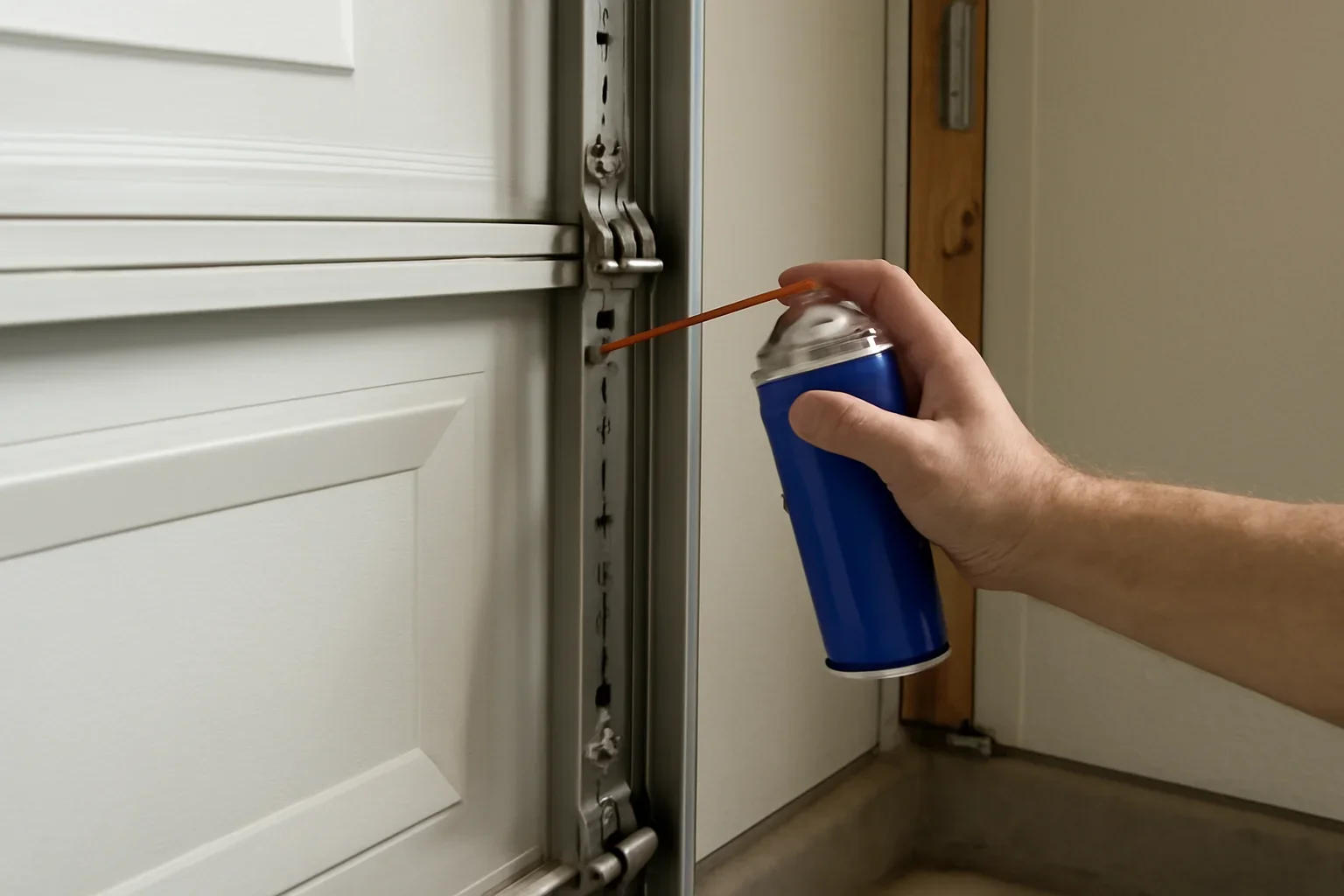
Homeowner reviewing garage door lubrication points in Langley
Use the correct product Choose a garage-door-specific silicone or approved lithium-based spray according to the door manual.
Use a light application Excess product attracts dirt, creates drips and does not improve movement.
Do not grease the tracks Clean dirt from the metal tracks, but keep the roller pathway free from oily buildup.
Do not adjust tension parts Springs, cables, drums and bottom brackets should never be loosened during homeowner maintenance.
Quick answer

What parts of a garage door should be lubricated?

Apply a small amount of manufacturer-approved garage door lubricant to metal hinge pivot points and exposed roller bearings. Depending on the door model, the manual may also identify bearing plates, pulleys or intact spring surfaces as maintenance points.

Do not coat the metal tracks, nylon roller surfaces, safety sensors, door panels or opener belt. Springs and cables must never be adjusted, loosened or repositioned as part of lubrication.

Before You Start

Know what is safe to lubricate and what should be left alone

The safest approach is to maintain only clearly accessible moving points identified in the door manufacturer’s instructions.

Homeowner maintenance points

1 Metal hinge pins and pivot points connecting the door sections.
2 Exposed metal bearings inside steel or bearing-style rollers.
3 Manufacturer-approved bearing or pulley points that are safely accessible.
4 Rubber weather seals only when the door manufacturer recommends a compatible silicone product.

Do not lubricate, loosen or adjust

1 Metal tracks where the roller wheels travel.
2 Nylon roller wheel surfaces, door panels or photo-eye sensors.
3 Lift cables, cable drums, bottom brackets or spring fasteners.
4 Opener belts, chains, rails or internal gears unless the opener manual specifically calls for lubrication.
Choosing a Lubricant

What type of lubricant should you use?

Check the door manual first because materials and hardware differ between manufacturers and product lines.

Preferred starting point

Garage-door-specific spray

A product labelled for garage door hinges, bearings and rollers provides clearer application guidance than a general household spray.

Common approved type

Silicone-based lubricant

Silicone garage door products are often used on suitable metal moving points and may also be compatible with selected seals.

Model-specific use

White lithium product

Some doors and opener components specify a lithium-based product. Use it only where the applicable manual permits it.

Avoid using a general water-displacing cleaner as the long-term lubricant unless the door manufacturer specifically approves that product for the component.

Step-by-Step Maintenance

How to lubricate accessible garage door hardware

Work only when the door is fully closed, stable and showing no signs of broken springs, loose cables, off-track rollers or damaged brackets.

Keep the wall button, remotes and keypad away from other people while maintenance is underway so the door is not operated unexpectedly.

01
Close the door and inspect it first Look for a spring gap, frayed cable, crooked section, loose bottom bracket, bent track or roller outside the track. Stop if any of these conditions are visible.
02
Wipe dust from accessible hardware Use a dry or lightly damp cloth to remove visible dust from hinges and the outside of the tracks. Do not disturb spring or cable attachments.
03
Clean the roller pathway Remove loose dirt from the inside of the tracks without adding grease or oil. The roller surface needs a clean pathway rather than an oily coating.
04
Apply a light amount to hinge pivots Direct a small amount to the metal pivot point where the hinge moves. Avoid spraying the door panel and wipe away runoff.
05
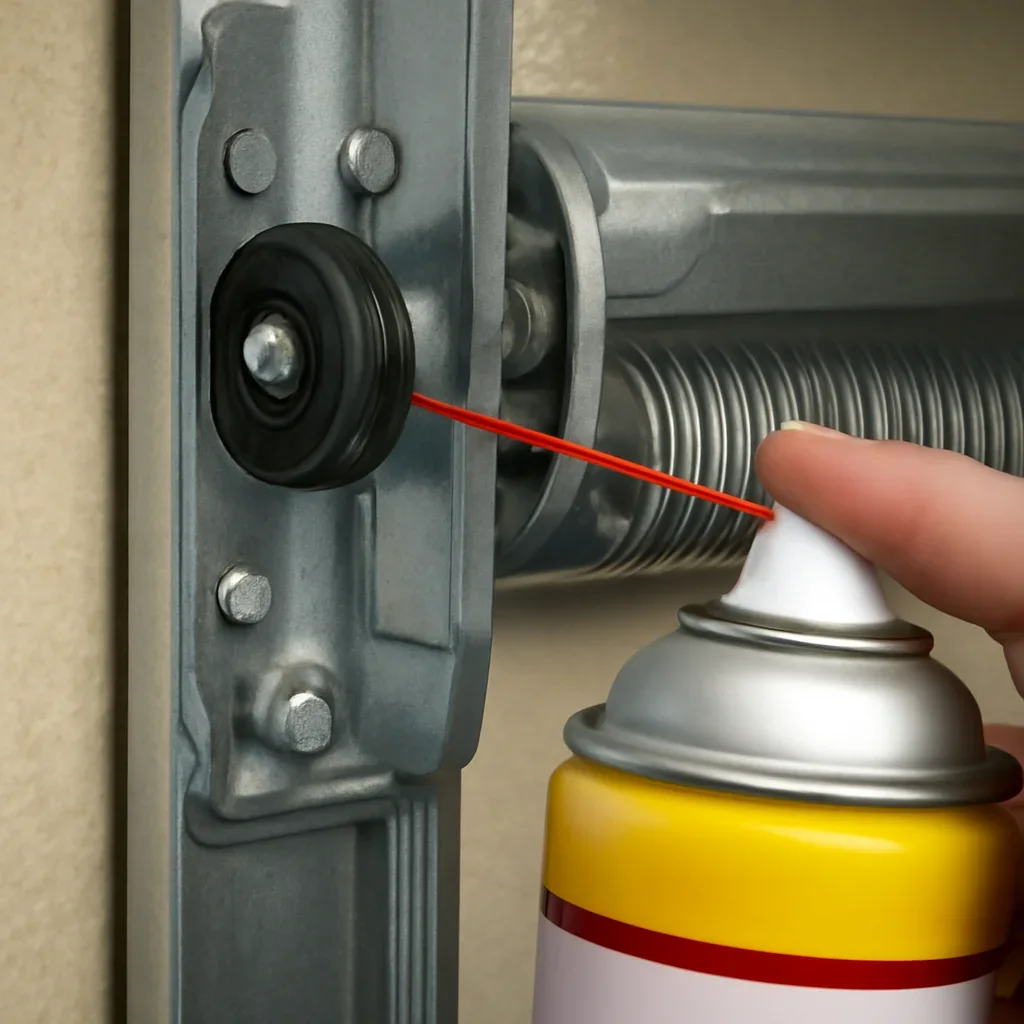
Lubricate exposed metal roller bearings Apply lubricant to the bearing area or metal shaft where permitted. Do not coat the nylon wheel or fill the track with spray.
06
Follow the manual for other components Bearing plates, pulleys, springs and opener components vary by model. Skip any point that requires touching tension hardware, climbing around the spring system or removing a cover.
07
Remove excess lubricant Wipe away visible drips. A thin film at the correct moving point is more useful than a heavy coating that collects dust.
08
Operate the door and listen Run a few complete cycles from a safe position. Note whether the original squeak improves or whether grinding, popping, scraping or uneven movement remains.
Garage Door Maintenance in Langley

Local moisture, grit and daily use can affect maintenance needs

Langley’s wet months can leave moisture and road debris around garage openings. Rural and workshop properties may also collect more dust, fine gravel and outdoor residue near the tracks and bottom seal.

This does not mean more lubricant is better. In many cases, cleaning away dirt and applying a light amount at the correct pivot or bearing point is more effective than repeatedly spraying the complete system.

Attached garages in newer neighbourhoods may make small squeaks more noticeable inside nearby rooms. Older doors may sound louder because of worn rollers, loose hinges or poor alignment that lubrication alone cannot correct.

01
Willoughby townhomes Attached living areas can make roller and hinge noise easier to hear, but vibration may also come from the opener or loose hardware.
02
Walnut Grove and Murrayville homes Frequently used family garages may benefit from regular visual checks rather than waiting for noise to become severe.
03
Brookswood and older garages A persistent scrape or clunk may come from worn rollers, loosened hinges, track condition or door balance rather than dryness.
04
Aldergrove and rural shops Dust and grit can collect more quickly around larger or detached openings, making track cleaning especially important.
Close view of garage door hinges and rollers during maintenance
Listen to the Sound

What if the garage door is still noisy after lubrication?

Lubrication can reduce dry friction, but different sounds may identify a mechanical, alignment or opener problem.

Squeaking

A dry hinge pivot or exposed bearing may squeak. If the sound remains at one point, inspect that component for wear.

Grinding or scraping

This may indicate a damaged roller, bent track, metal contact or poor alignment. Adding more lubricant is not the correct fix.

Popping or snapping

Stop operating the door when the sound appears near the spring, cable, drum or upper track area and arrange an inspection.

Motor hum or chain rattle

The noise may be coming from the opener rather than the door. Opener drive maintenance must follow the exact model manual.

Maintenance Schedule

How often should a garage door be lubricated?

Follow the schedule in the door manual. For many residential doors, periodic inspection and annual lubrication of approved points is a practical starting point.

Regular inspection

Check in spring and autumn

Look for new noise, dirt buildup, worn rollers, loose visible hardware, damaged seals and changes in door movement.

Typical maintenance

Lubricate approved points periodically

Many doors need only a light annual application. High-use doors may require inspection more often according to the manufacturer.

Do not wait for failure

Respond to new movement or noise

Crooked travel, cable slack, scraping and heavy operation should be inspected rather than covered with additional lubricant.

Lubrication is maintenance, not a spring or cable repair

Garage door springs and cables support the door’s weight and remain under significant tension. Do not loosen spring fasteners, cable drums, bottom brackets or related hardware while trying to reduce noise.

If a spring has a visible gap, a cable is frayed or loose, the door hangs unevenly, or a roller has left the track, stop operating the system and use garage door repair rather than applying lubricant.

When Maintenance Is Not Enough

When should a noisy garage door be professionally inspected?

Service is appropriate when noise remains after light maintenance or is combined with a change in movement, balance or opener performance.

Door movement

The door is heavy or uneven

Lubricant cannot correct spring balance, cable tension or a door that drops, rises unevenly or will not stay aligned.

Hardware wear

A roller or hinge is damaged

Cracked nylon, loose roller stems, bent hinges and worn bearings normally require matched replacement parts.

Alignment

The door scrapes or binds

Bent tracks, shifted brackets, panel damage or poor alignment can create friction that should not be hidden with grease.

Opener strain

The motor struggles or reverses

The door should be assessed for resistance and balance before opener settings or replacement are considered.

Prepare Your Service Request

What information helps diagnose a noisy garage door?

You do not need to identify the failed part. Describe the sound, movement and changes you have noticed.

01

Langley service address

Include the full address and any strata, rear-lane, gate, parking or detached-building access details.

02

Location of the sound

Explain whether it comes from a hinge, roller, upper track, spring area or opener motor.

03

When the sound occurs

Note whether it happens while opening, closing, starting, stopping or moving around the curved track.

04

Visible hardware condition

Send safe photos of rollers, hinges, tracks, springs and the complete inside of the closed door.

05

Recent maintenance

Mention which lubricant was used, where it was applied and whether the noise changed afterward.

06

Door and opener information

Include the door type, approximate age, opener brand and any recent repairs when known.

Related Garage Door Support

Continue with the guide that matches the problem

Use these pages when the issue involves door movement, sensors, opener operation, weather seals or a repair rather than routine lubrication.

Garage Door Lubrication FAQ

Questions Langley homeowners ask about lubrication

These answers cover lubricant selection, rollers, tracks, springs, opener components and maintenance frequency.

What is the best lubricant for a garage door?

Use a product specifically labelled for garage doors or the exact lubricant recommended in the door manual. Silicone-based and approved lithium-based products are common, but the correct application depends on the component.

Can I use WD-40 to lubricate my garage door?

A general water-displacing cleaner is not normally the best long-term lubricant for garage door moving parts. Use a dedicated garage door lubricant unless the manufacturer states otherwise.

Should garage door tracks be lubricated?

No. Wipe dirt and debris from the tracks, but do not coat the roller pathway with oil or grease. Lubricant on the tracks can collect debris and create buildup.

Should garage door rollers be lubricated?

Lubricate exposed metal bearings or shafts where the manufacturer permits it. Do not coat the nylon wheel surface, and do not spray lubricant throughout the track.

Can I lubricate garage door springs?

Some manufacturers include intact spring surfaces in their maintenance instructions. Because springs are under high tension, never touch, loosen, wind or reposition them. Follow the exact door manual or leave spring maintenance to a technician.

Should I lubricate the garage door opener chain?

Only when the opener manufacturer specifically requires it. Belts, chains, screw drives and rails have different maintenance requirements, so follow the exact opener manual.

How often should I lubricate my garage door?

Follow the manufacturer’s schedule. Periodic inspection and annual lubrication of approved moving points is a practical starting point for many residential doors.

Why is my garage door still noisy after lubrication?

The sound may come from a worn roller, loose hinge, bent track, damaged bearing, poor door balance or the opener rather than dry hardware.

Can too much lubricant cause problems?

Yes. Excess product can drip, collect dust and create dirty buildup. Apply a light amount at the correct point and wipe away anything that runs onto nearby surfaces.

Can lubrication fix a heavy garage door?

No. A heavy or poorly balanced door may have a spring, cable, roller, track or alignment problem. Stop operating it and arrange an inspection.

Should I lubricate the bottom weather seal?

Some rubber or vinyl seals may benefit from a compatible silicone product, but only use one approved by the door or seal manufacturer.

When should I book garage door service?

Book service when the door is crooked, heavy, scraping, off track or showing loose cables, spring damage, worn rollers or continuing noise after basic maintenance.

Still hearing grinding, popping or scraping?

Send the Langley address, door and opener photos, the location of the sound, when it occurs and any lubrication already applied.

Book a garage door inspection Request an estimate Call +1 (844) 822-2211

The final recommendation depends on the door model, hardware condition, balance and source of the noise.