The door reverses near the floor
The opener may detect an interrupted or unstable safety beam and send the door back up before it reaches the floor.

Garage door sensor repair may be needed when the door starts down and reverses, refuses to close, shows a flashing sensor light, or only closes while the wall button is held. These symptoms often point to a blocked beam, poor alignment, damaged wiring, a loose bracket, or a fault elsewhere in the opener system.
The goal is to confirm why the safety system is interrupting the closing cycle, correct the actual cause, and test the door without bypassing a feature designed to help protect people, pets, vehicles, and stored items.
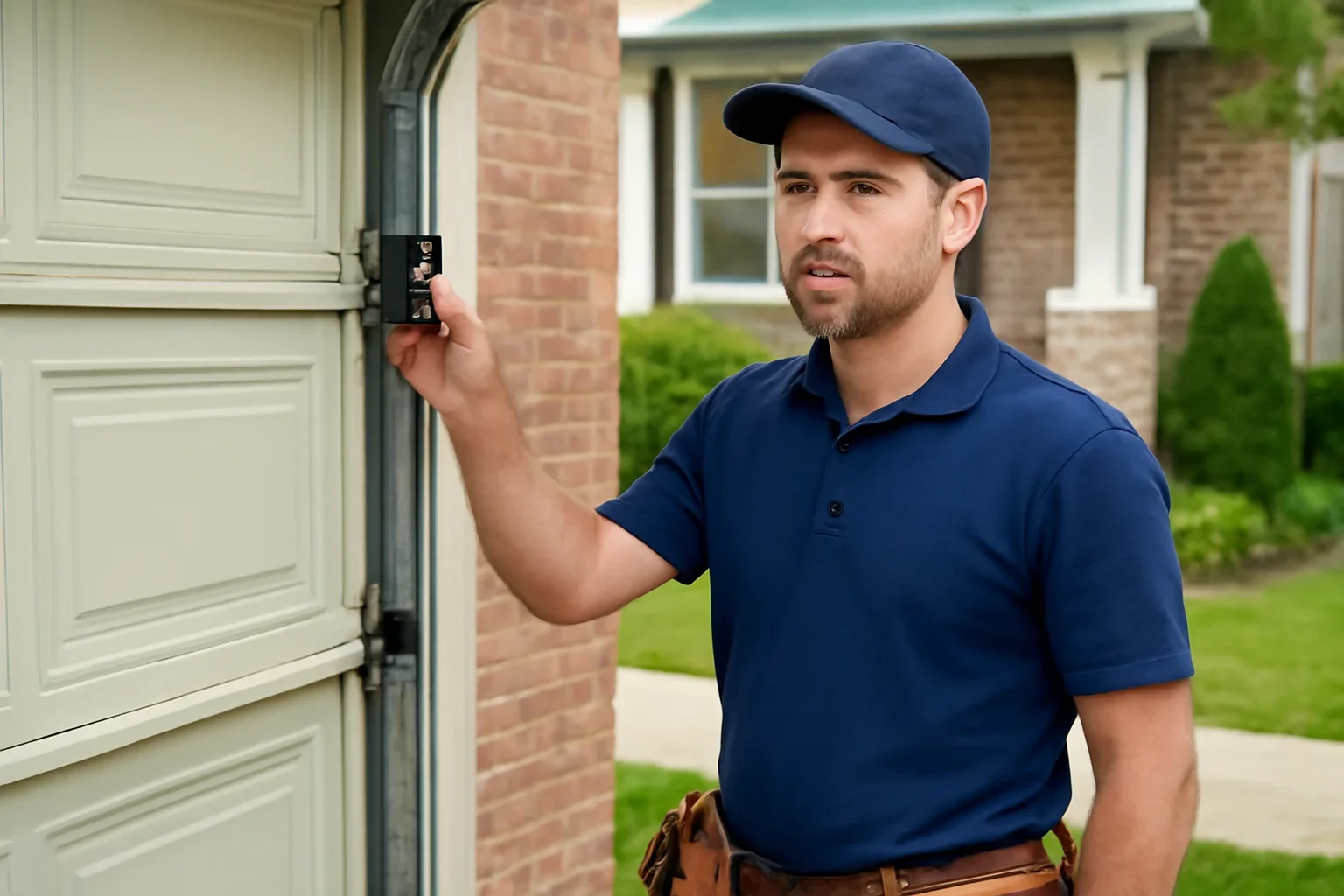
Sensor problems usually show up during closing. The exact pattern can help separate a sensor issue from a remote, opener, track, or door-balance problem.
The opener may detect an interrupted or unstable safety beam and send the door back up before it reaches the floor.
A remote can seem faulty when the opener is actually refusing the close command because the sensors are blocked, misaligned, or not communicating.
Indicator behaviour can help narrow the issue to power, alignment, wiring continuity, bracket movement, or a sensor that may need replacement.
Direct sunlight, moisture, vibration, dust, or a loose mount can create intermittent problems that are not present every time the door is used.
Safety sensors are intended to interrupt closing when the beam is blocked or the system cannot confirm a clear path. Do not tape the sensors together, defeat the beam, or repeatedly force the door closed. Keep children, pets, vehicles, and stored items away from the opening until normal reversal and closing behaviour has been confirmed.
If the door is moving unpredictably, has come off its track, appears crooked, or is also making unusual mechanical sounds, stop using it and arrange a broader garage door repair assessment.
A proper check should look beyond whether both sensor lights are on. The sensor pair, mounting position, wiring path, opener response, and physical door movement all affect the result.
The sensors should face one another across the opening at the correct height, with no objects, dirt, webs, or stored items breaking the beam.
Loose brackets, pinched low-voltage wires, corroded connections, staple damage, and movement near the track can cause a complete or intermittent signal loss.
The close command, warning lights, motor behaviour, travel settings, and mechanical movement are checked so a sensor symptom is not mistaken for an opener or door-hardware fault.
After the cause is addressed, the door should complete a normal closing cycle and respond correctly when the safety beam is interrupted.
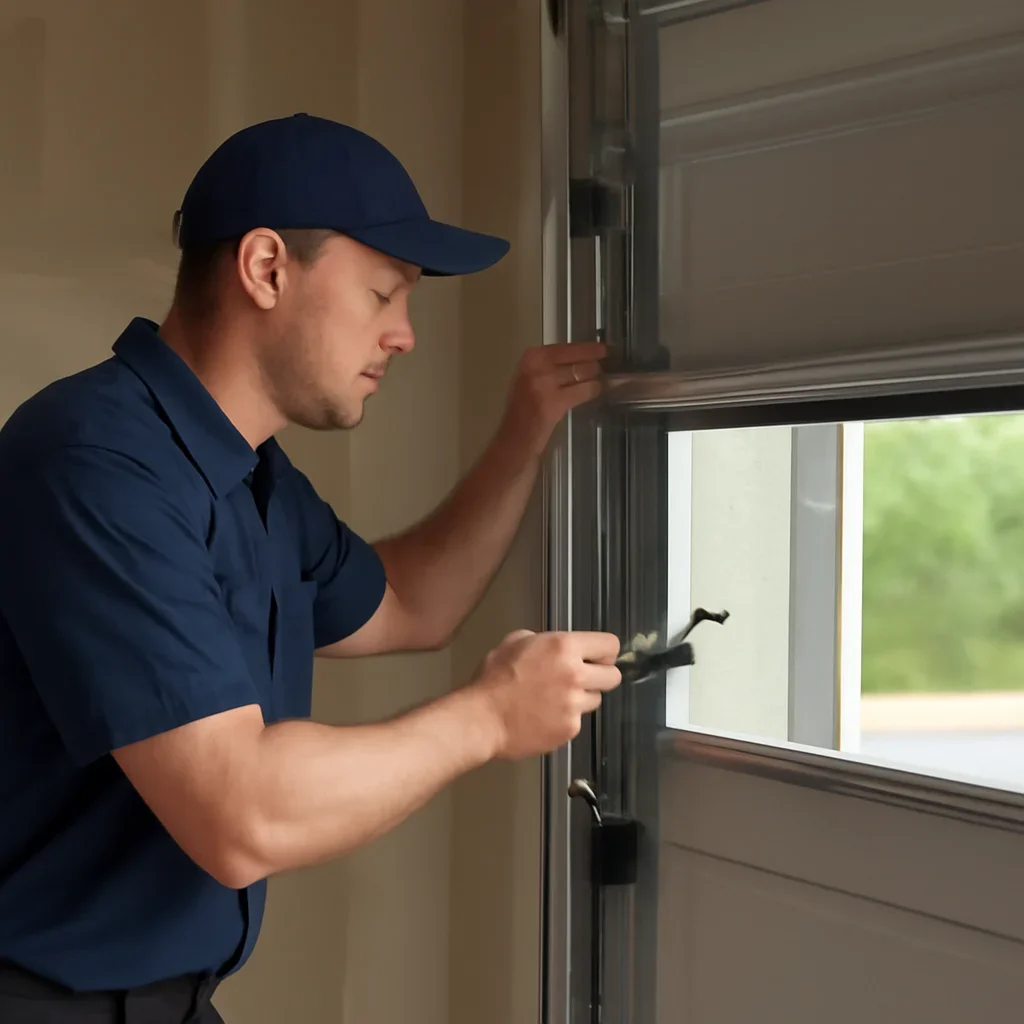
Some causes are simple and visible. Others are intermittent or connected to the opener, wiring, or door movement.
A small impact from a bicycle, shovel, recycling bin, vehicle tire, or stored item can move a sensor enough to interrupt the beam.
Dust, cobwebs, water spots, road debris, and items stored near the track can interfere with a clear line between the sensor pair.
Wires can be cut, pulled, pinched, corroded, or damaged where they run along the wall, track, ceiling, or opener connection points.
Water near the garage entrance, condensation, and seasonal dampness may affect connections or create inconsistent sensor behaviour.
Strong light entering the doorway at a certain angle can sometimes disrupt the receiving sensor or make an existing alignment issue more noticeable.
If the sensor pair and wiring test correctly, the issue may be tied to the opener terminals, logic board, travel settings, or another part of the control system.
The photo-eye sensors communicate with the opener, but the opener also depends on the door moving freely and staying within its set travel range. A closing problem may involve more than one component.
When lights or controls are behaving oddly, a focused garage door opener repair check may be the better service path.
Realignment, bracket correction, cleaning, or wiring repair may be enough when the sensor units are compatible and still functioning. Replacement may be worth comparing when a sensor has physical damage, internal failure, severe corrosion, unreliable output, or compatibility problems with the opener.
If the opener itself is outdated or repeatedly failing, compare the scope with garage door opener replacement.
The final scope depends on what is causing the interruption, how accessible the wiring is, and whether the issue is limited to the sensor system.
| Scope factor | Why it matters | What may need confirmation |
|---|---|---|
| Alignment or mounting issue | A loose or bent bracket may need correction before the beam can remain stable. | Bracket condition, track position, and whether impact damage is present. |
| Wiring damage | Visible damage near the sensor may be straightforward, while concealed or ceiling-routed damage can take longer to trace. | Wire path, connection points, corrosion, staples, and accessibility. |
| Sensor replacement | Replacement depends on opener compatibility and whether the pair should be changed together. | Opener model, sensor type, terminal setup, and parts availability. |
| Opener or door fault | A sensor warning can overlap with travel, control-board, track, roller, or balance problems. | Door movement, opener response, warning codes, and related hardware condition. |
Exact pricing should be confirmed after the symptom, opener details, wiring condition, and required parts are understood. General cost factors are also explained in the garage door repair cost guide.
Sensor access and wiring routes can differ across Langley homes. Newer townhouses in Willoughby may have tighter garage storage and strata requirements. Established homes in Walnut Grove or attached garages in Murrayville may have older opener wiring or past hardware changes.
Custom properties in Fort Langley and detached garages, workshops, or acreage buildings around Aldergrove may use wider doors, longer wire runs, different ceiling layouts, or equipment stored close to the tracks. These details can affect diagnosis, access, and the parts needed.
These details help determine whether to book sensor work directly or consider same-day garage door repair for a door that cannot be secured or used normally.
A closing problem is not always caused by the photo eyes. These related pages help separate control, access, installation, and mechanical issues.
These answers cover the most common questions about safety-sensor symptoms, repair decisions, and booking in Langley.
Book sensor repair when the door repeatedly reverses, refuses to close, shows an off or flashing sensor light, or only closes under unusual control conditions. A consistent safety-system fault should be checked rather than bypassed.
Normal automatic closing should not continue when the safety sensors are not working correctly. Keep people, pets, vehicles, and stored items away from the opening, and do not defeat or tape the sensors together.
The sensor beam may be blocked, misaligned, unstable, or losing power. The opener can also reverse because of track resistance, travel settings, or another mechanical problem, so the full closing cycle should be checked.
Strong direct sunlight can sometimes affect the receiving sensor or expose an alignment problem that is already present. Bracket position, wiring, lens condition, and sensor performance should still be inspected before assuming sunlight is the only cause.
Some damaged low-voltage wiring or loose connections may be repairable, depending on the location and condition of the wire. Concealed damage, corrosion, multiple breaks, or incompatible components may make partial or full replacement more practical.
It depends on the opener and sensor design. Some systems use a matched pair, so replacing both may be recommended for compatibility and reliable operation. The opener model and existing sensor type should be confirmed first.
A sensor fault usually stops or reverses the closing cycle, but repeated attempts to force the door closed can add unnecessary use and hide another opener or door problem. The controls, travel, and door movement should be checked together when symptoms overlap.
Share your neighbourhood, opener model, the position of the door, the behaviour of both sensor lights, any opener flashes or error codes, when the problem occurs, and photos of the sensors, brackets, and nearby wiring.
Include your neighbourhood, opener model, whether the door closes from the wall control or remote, what each sensor light is doing, any recent impact or moisture, and clear photos of both sides of the doorway. This helps map the likely service scope before the appointment.