Daylight is visible under the door
A continuous gap may mean the bottom seal is worn. A gap at one side may also point to an uneven floor, cable issue, or door that does not close level.

Garage door weather seals help reduce drafts, wind-driven rain, leaves, dust, insects, and small gaps around the opening. When the bottom seal is cracked, flattened, missing, or no longer touches the floor evenly, the garage may feel colder, collect debris, or show daylight under and around the door.
Garage door weather seal replacement in Brookswood should account for the door type, bottom retainer, floor slope, side and top weatherstripping, door alignment, panel condition, and drainage around the driveway. A new seal cannot fully correct a crooked door, damaged track, uneven floor, or opening that no longer fits the door.
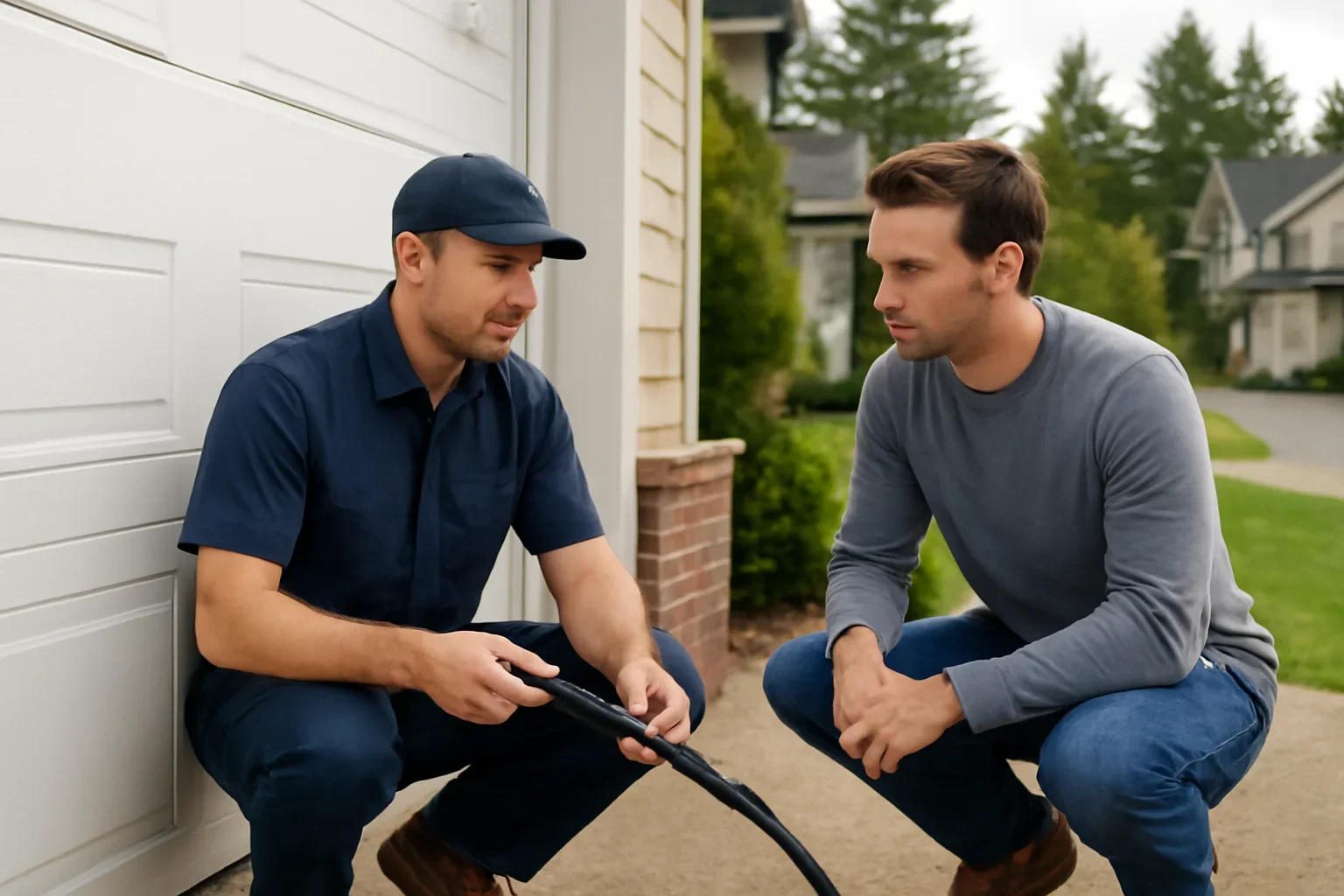
Replacing rubber or vinyl can improve contact, but the seal cannot compensate for every gap. The door should close evenly against the floor and jambs before the final material and fit are confirmed.
Seal problems often show up as visible wear, light, air movement, moisture, debris, or inconsistent contact around the opening.
A continuous gap may mean the bottom seal is worn. A gap at one side may also point to an uneven floor, cable issue, or door that does not close level.
Old material can harden, split, shrink, or remain compressed, reducing its ability to follow small floor variations.
Gaps at the bottom corners or worn side seals can allow wind-driven leaves, dust, seeds, and small debris to collect near the door.
Moisture may pass through a poor bottom seal, but driveway slope, slab cracks, drainage, and wind direction should also be considered.
Air movement may come from the bottom seal, side and top weatherstripping, panel joints, wall gaps, or an uneven closing position.
Damaged lower corners, missing side seals, chewed material, or uneven floor contact can create entry points around the garage door.
A useful assessment identifies the seal type and the reason contact was lost so the replacement material is not expected to solve a mechanical or drainage problem.
Different seals protect different edges. A good result may involve one component or a coordinated perimeter update.
The flexible lower seal compresses against the floor and follows small variations when the door closes level.
The retainer holds the seal profile. Corrosion, bent channels, loose fasteners, or incompatible shapes can prevent secure installation.
Flexible side seals contact the exterior face of the door to reduce gaps caused by normal movement and opening variation.
The upper seal helps close the gap between the top section and header while allowing the door to move without binding.
The exact work depends on the seal profile, retainer, door condition, floor, perimeter trim, and whether alignment or opener adjustments are also required.
The light, draft, moisture, debris, or pest entry pattern is compared with the bottom edge, corners, sides, top, floor, and door alignment.
The bottom retainer, seal profile, door thickness, side and top stop condition, and required compression are reviewed.
Worn material is removed, approved surfaces are prepared, and compatible seals or weatherstripping are fitted without forcing the door.
The door is checked for level contact, free travel, opener closing position, sensor operation, corner gaps, and excessive compression.
Clear expectations help separate a sealing project from a door, floor, drainage, or structural repair.
Weatherstripping should not be used to conceal a mechanical problem that keeps the door from closing evenly.
An uneven bottom gap may involve cable tension, drum tracking, spring balance, rollers, tracks, or a floor that is not level.
Track resistance, worn rollers, panel damage, sensor problems, or incorrect opener travel can prevent normal contact at the floor.
Rust, impact, bent retainers, loose fixtures, or a distorted panel can prevent a new seal from sitting straight and staying secure.
The final scope depends on the door width, seal system, retainer, perimeter condition, and whether other repairs are needed.
A seal estimate should identify which edges are included and whether alignment, retainer, panel, or drainage issues remain outside the sealing scope.
Brookswood has many mature detached homes, larger driveways, established trees, and attached garages used for vehicles, storage, bicycles, and daily household entry. Tree cover can bring leaves, seeds, moisture, and small debris to the threshold.
Older garage slabs may have settlement, cracks, low corners, or previous patching that creates uneven bottom contact. Driveways that slope toward the garage can also direct more water to the opening than a flexible seal can manage by itself.
Share where light or water appears, the direction the driveway slopes, the age of the door, and clear photos of the bottom edge, both corners, side seals, and floor.
These pages can help compare weather-seal work with door, panel, alignment, and opener service.
Excessive closing force can strain the opener, panels, and hardware. Seal fit and closing position should be adjusted without forcing the door.
Use the service booking page when the door is crooked, stuck, off track, unable to close, or creating an immediate access or security problem.
Garage door seals address gaps at the opening. Water entering through slab cracks, walls, roofing, grading, or drainage may require a separate building or drainage assessment.
These answers cover bottom seals, daylight, drafts, water, pests, uneven floors, opener settings, and estimate preparation.
Replacement may be useful when the bottom seal is cracked, hard, flattened, missing, or pulling away, or when worn side and top seals allow daylight, drafts, leaves, dust, insects, or minor moisture through a properly aligned opening.
Not always. A compatible seal can reduce minor water entry at the bottom edge, but driveway slope, floor settlement, slab cracks, drainage, wind direction, and water entering through walls or trim may still need separate attention.
A corner gap may come from an uneven floor, a door that does not close level, cable or balance issues, track alignment, a damaged bottom section, or a seal that has shrunk or worn unevenly.
A suitable profile may follow small floor variations, but an overly thick seal can prevent full closing or increase opener strain. Larger low spots, settlement, or drainage issues may require a different threshold or wider repair.
They can reduce entry through normal gaps when the door, floor, sides, and top are reasonably aligned. Damaged corners, wall gaps, large slab openings, and other building entry points may still need attention.
The closing position and safety behaviour may need to be checked so the door contacts the seal without excessive compression. Opener force should not be increased simply to push through a seal that is too thick or incorrectly fitted.
Share your Brookswood address, door width and age, where light or water enters, whether the gap is even, photos of the bottom edge, corners, side seals, floor, and driveway, plus any rust, impact, alignment, or opener concerns.
Book a repair assessment before treating the problem as a seal-only issue. A crooked, binding, off-track, or mechanically damaged door should be corrected before final weatherstripping is fitted.
Include your address, door width and age, where light, drafts, water, leaves, or pests enter, photos of the bottom edge, corners, side and top seals, floor and driveway, plus any rust, uneven closing, opener, or drainage concerns.