The door reverses near the floor
The sensors may be misaligned, blocked, vibrating, dirty, sun-affected, or losing their signal during closing.

Garage door safety sensors help prevent the door from closing when the beam is blocked or the system detects a problem. Blinking lights, reversing, a door that will not close, or controls that work only when held can point to alignment, wiring, bracket, lens, power, or opener-board trouble.
Fernridge properties often include longer driveways, detached shops, semi-rural garages, and weather-exposed openings. Dust, leaves, moisture, insects, sunlight, equipment movement, separate electrical service, and longer wiring runs can all affect how sensor problems appear.
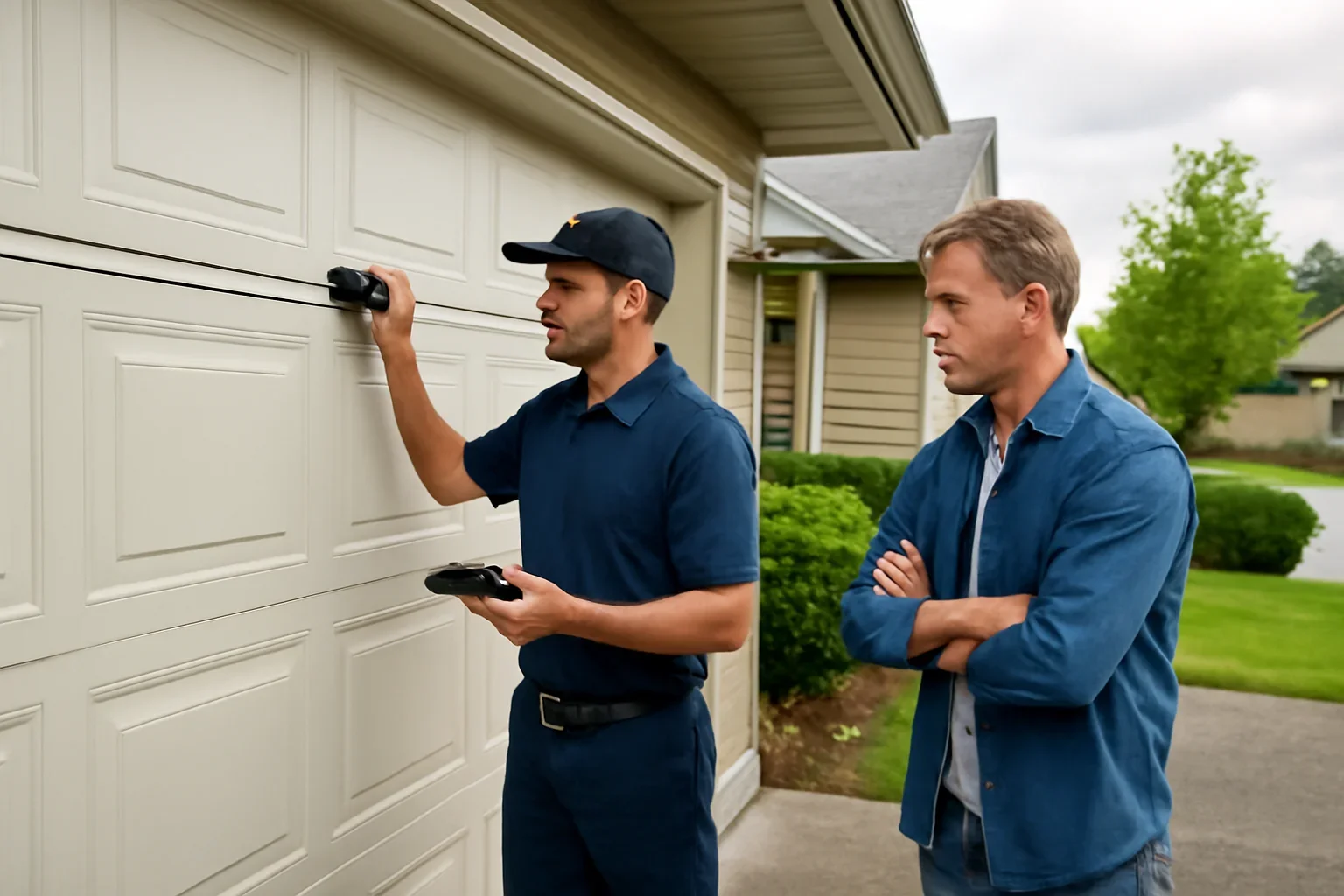
Sensor symptoms can look similar to travel-limit, force, wiring, control, or mechanical door problems. The timing and indicator lights help narrow the cause.
The sensors may be misaligned, blocked, vibrating, dirty, sun-affected, or losing their signal during closing.
A blinking or missing indicator may point to alignment, damaged wiring, poor power, a loose connector, or a failed sensor.
Some openers allow constant-pressure closing when the safety-sensor circuit is not operating normally.
This pattern often directs attention to sensors, wiring, obstruction detection, or the opener’s safety circuit.
Low-angle sunlight or reflections may interfere with one sensor at certain times, especially on exposed openings.
A broom, mower, storage bin, vehicle tire, tool, equipment, or hose can move a bracket, pinch a wire, or damage a lens.
Safety sensors are part of the opener’s closing protection. Moving them above the required position, taping controls, bypassing wiring, or increasing force does not correct the underlying problem.

A sensor pair may be working correctly and reacting to another problem. The door, opener, wiring, brackets, and opening should be considered together.
Most sensor faults fall into alignment, obstruction, wiring, power, environmental, hardware, or opener-control categories.
A small bracket shift can break the beam even when both sensors still look close to level.
Vibration, impact, rust, weak fasteners, cleaning, or equipment contact can let a sensor move during operation.
Dust, mud, leaves, spider webs, condensation, rain splash, or insects can interfere with the beam or indicator light.
Staples, rodents, tools, storage, moisture, corrosion, stretching, or loose terminals can interrupt the low-voltage circuit.
Low-angle light can affect one sensor on exposed openings at certain times of day or seasons.
The sensor pair may lose proper voltage because of a connector, terminal, transformer, control-board, or opener problem.
A binding roller, bent track, poor balance, damaged seal, or obstruction near the floor can look like a sensor reversal.
Wrong replacements, age, internal damage, mismatched pairs, or unsupported components can prevent a steady safety circuit.
The exact process depends on the opener model, indicator pattern, wiring layout, opening exposure, bracket condition, and whether the door moves safely.
Remote, wall-control, light, reversal, and constant-pressure behaviour help identify whether the safety circuit is involved.
Objects, debris, sunlight, moisture, lenses, brackets, height, and alignment should be reviewed before parts are replaced.
Low-voltage wires, staples, terminals, splices, corrosion, damaged insulation, and opener connections are checked.
The door is checked for binding, poor balance, track resistance, seal contact, or another cause of reversal near the floor.
The solution may involve alignment, bracket work, wiring repair, connection service, compatible sensor replacement, or opener diagnosis.
Indicator stability, remote closing, wall control, reversal response, travel, floor approach, and full door movement should be observed.
A door that reverses or will not close is not always caused by the sensor pair itself.
If the opener tries to push the door below the floor position, it may reverse even when the sensor beam remains clear.
Track damage, rough rollers, tight weather seals, floor obstructions, poor balance, or panel movement can create closing resistance.
Diagnostic lights, terminal voltage, remote behaviour, wall controls, and board faults may need assessment when sensor lights look normal.
A crooked, off-track, heavy, or damaged door needs broader garage door repair before sensor adjustments or opener testing continue.
A focused repair may be practical when the sensors remain compatible and the issue is limited to alignment, a loose bracket, dirt, moisture, one damaged wire, a connection, or a minor mounting problem.
Replacement may be more practical when housings are damaged, indicator lights remain unstable, wiring is badly deteriorated, the pair is incompatible, or the opener’s safety circuit and control board are failing.
For broader motor, rail, trolley, control, travel, or board problems, compare sensor work with garage door opener repair. For an aging unsupported unit, opener replacement may also be worth reviewing.
Exact pricing depends on whether the fault is limited to alignment or involves wiring, brackets, sensors, opener controls, access, or a mechanical door problem.
Simple movement differs from rusted, bent, broken, loose, or impact-damaged sensor mounting.
A loose terminal differs from hidden, stapled, corroded, cut, rodent-damaged, or long detached-building wiring.
Opener brand, model, age, safety circuit, connector style, and parts availability affect replacement options.
Power, transformer, terminal, diagnostic, or control-board faults can expand the service beyond the sensor pair.
Binding tracks, rough rollers, poor balance, damaged seals, or an uneven door may need separate repair.
Gates, long driveways, gravel, mud, trailers, equipment, detached shops, storage, and weather can affect planning.
Local context matters because detached buildings, longer wiring runs, separate power circuits, sunlight, damp air, dust, leaves, insects, equipment movement, and driveway exposure can affect sensor reliability.
Share whether the opening is attached, detached, shop-based, heated, finished, weather-exposed, or used for trucks, trailers, tools, storage, or equipment. Gate and driveway access also help frame the visit.
Separate buildings may have longer low-voltage wire runs, different electrical circuits, more moisture, less frequent inspection, and greater remote distance.
Rain splash, condensation, sunlight, dust, leaves, insects, and temperature changes can affect lenses, brackets, wiring, and connections.
Mowers, bins, hoses, tires, lumber, machinery, and workshop items can block the beam, move brackets, or damage low wiring.
Gate instructions, gravel, mud, snow, parked equipment, turning space, and detached-building access can affect service planning.
A closing or reversal problem may involve sensors, opener controls, travel settings, wiring, a binding door, weather seals, or broader mechanical damage.
Do not bypass the sensors or move an unsafe door. From a safe position, note:
Keep both lenses and the beam path clear. Avoid storing bins, tools, lumber, hoses, mowers, trailers, or equipment against the brackets or wiring.
Check for leaves, webs, mud, moisture, and loose brackets after cleaning, impact, storms, or equipment movement. Do not relocate or bypass the sensors when recurring interference appears.
These answers explain reversing, blinking lights, sunlight, wiring, bypass risks, detached-shop conditions, and what helps before an appointment.
Sensor repair becomes more urgent when the door will not secure the building, closes unpredictably, reverses repeatedly, or the safety circuit has been damaged or bypassed. A crooked, off-track, heavy, or unstable door needs broader repair rather than sensor adjustment alone.
Common causes include a blocked or misaligned sensor beam, blinking sensor fault, damaged wire, loose bracket, sunlight, moisture, opener-board trouble, travel-limit error, or mechanical resistance near the floor.
A blinking light may indicate poor alignment, vibration, obstruction, wiring damage, a loose connection, low voltage, moisture, a failed sensor, or a compatibility problem. The opener model and light pattern help narrow the cause.
Yes. Direct low-angle sunlight or reflections can interfere with one sensor at certain times. The lenses, brackets, alignment, surrounding surfaces, wiring, and overall sensor condition should still be checked before assuming sunlight is the only cause.
No. Bypassing, raising, disconnecting, or taping controls defeats part of the opener’s closing protection and does not repair the fault. The beam, brackets, wiring, sensors, opener controls, and door movement should be diagnosed correctly.
They can. Detached buildings may have longer wiring runs, separate power circuits, more dust, moisture, insects, sunlight, equipment movement, temperature change, and less frequent inspection than attached garages.
Share the Fernridge location, building type, opener model, door position, which controls work, sensor-light colours and blinking, sunlight or moisture conditions, visible bracket or wiring damage, where the door reverses, gate and driveway details, and clear photos when safe.
Yes. Travel limits, force settings, control-board faults, damaged seals, rough rollers, bent tracks, poor balance, or an obstruction near the floor can create similar symptoms. The door and opener should be checked together.
Send the building type, opener model, current door position, which controls work, sensor-light colours and blinking, sunlight or moisture conditions, visible bracket or wiring damage, where the door reverses, gate and driveway details, nearby equipment, and photos when safe. Do not bypass the sensors or operate an unstable door.